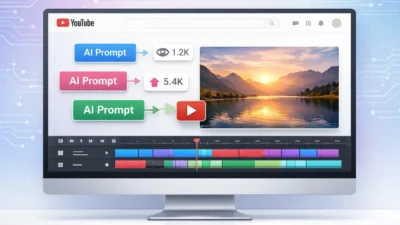

Most AI prompts for social media give you something technically correct and completely forgettable. The post sounds fine. It just sounds like everyone else.
I spent the last year testing prompts across every major platform to figure out what actually produces content worth posting.
What I found is that the quality of your output has almost nothing to do with which AI tool you use. It comes down entirely to how well you write the prompt.
This article gives you ready to use prompts for Facebook, Instagram, TikTok, LinkedIn, Pinterest, X, and Threads. Each one is built around how that specific platform actually works.
You will also find a section on writing your own prompts from scratch and the most common mistakes that make AI content sound robotic.
Copy any prompt, fill in your details, and post.
Facebook Post Prompts
Facebook still drives massive reach for brands and creators. But writing posts that actually get seen in the feed takes more than just sharing a link or dropping a quick update. The algorithm rewards posts that spark conversations, and that is exactly where a good AI prompt comes in.
I have tested dozens of Facebook prompt styles over the past year. The ones below consistently produce content that feels personal, drives comments, and keeps followers engaged. You can copy any of these directly into ChatGPT, Claude, or Gemini and tweak the bracketed sections to match your brand.
For Pages and Business Profiles
These prompts work best when you are posting from a brand page or business profile. They are built to generate content that feels approachable while still pushing your business goals forward.
Prompt 1: The Storytelling Product Post
Role:
Act as a seasoned social media copywriter specializing in authentic, story-driven content for small businesses. You understand how to build community trust on Facebook through relatable, conversational storytelling — not salesy language.

Task:
Write a Facebook post for my [PRODUCT/SERVICE] that tells a brief, compelling customer success story using the following details:

Customer's first name (real or fictional): [NAME]
Who they are (brief context): [e.g., busy mom of three, freelance designer, retired teacher]
The problem they faced: [PROBLEM — be specific about the frustration, pain point, or unmet need]
The turning point: How they discovered or decided to try our [PRODUCT/SERVICE]
The outcome/transformation: [RESULT — what changed for them after using it]
Tone & Style Guidelines:

Warm, genuine, and conversational — like a friend sharing a story, not a brand selling something
Emotionally resonant but never exaggerated or fabricated-sounding
Use simple, everyday language — avoid jargon, buzzwords, or corporate speak
Write in a way that makes the reader think "that sounds like me"
Structure Preferences:

Open with a hook that draws attention within the first line (without clickbait)
Keep the story arc tight: struggle → discovery → relief/joy
End with a soft, inviting call to action that encourages readers to share their own experience or story in the comments (frame it as a conversation starter, not a sales push)
Constraints:

Stay under 100 words
Do not use hashtags
Do not use emojis unless I specify otherwise
Do not include links or promotional codes
Avoid generic phrases like "Don't miss out!" or "Order now!"
Write as a single flowing post — no bullet points or headers in the output
Optional — Tell me if you'd like me to:

Write 2–3 variations to A/B test
Adjust for a different platform (Instagram, LinkedIn, etc.)
Match a specific brand voice (playful, professional, earthy, bold, etc.)
Use this when you want to promote a product without sounding like an ad. Story based posts get 3 to 4 times more engagement than direct sales posts on Facebook.
Prompt 2: The Behind the Scenes Post
Role:
Act as a social media copywriter who specializes in authentic, behind-the-scenes content for small businesses. You know how to make everyday work moments feel interesting, human, and worth engaging with — without making them feel staged or performative.

Task:
Write a casual Facebook post capturing a real, behind-the-scenes moment at my [TYPE OF BUSINESS].

Scene Details (fill in as many as possible):

The specific moment: [SPECIFIC MOMENT — e.g., packing orders at midnight, prepping ingredients before opening, a messy brainstorm session, testing a new product, rearranging the shop floor]
Who's involved: [e.g., just me, my small team, my business partner, a loyal employee]
The setting/environment: [e.g., the back room, the kitchen, the garage workshop, the home office]
A small, honest detail that makes it real: [e.g., cold coffee on the desk, music blasting in the background, dog sleeping in the corner, sticky notes everywhere]
The emotion or energy of the moment: [e.g., exhausted but proud, chaotic but fun, quietly satisfying, nervously excited]
Tone & Style Guidelines:

Friendly, down-to-earth, and unpolished — like talking to a friend, not performing for a camera
Should feel like a candid snapshot, not a curated brand moment
Let imperfection show — that's what makes it relatable
Avoid inspirational monologues or "hustle culture" energy
No corporate speak, no motivational quotes, no "grinding" language
Structure Preferences:

Open by dropping the reader directly into the moment (no preamble or setup)
Let the reader see what's happening through one or two vivid, specific details
Close with a genuine, conversational question that invites followers to share something similar about their own work or daily life — make it feel like a two-way conversation, not a marketing tactic
Constraints:

Stay under 80 words
Do not use hashtags
Do not use emojis unless I specify otherwise
Do not include links, promotional language, or calls to purchase
Avoid clichés like "This is what it's really like…" or "Wouldn't trade it for the world"
Write as a single natural post — no bullet points, headers, or numbered lists in the output
Do not start with "So…" or "Just a reminder…"
Optional Add-Ons — Let me know if you'd like me to:

Write 2–3 variations with different moods (funny vs. reflective vs. energetic)
Suggest a photo or video idea to pair with the post
Adapt it for Instagram Stories, LinkedIn, or Threads
Match a specific brand voice you already use (describe it or share an example)
I use this type of prompt at least twice a month. Behind the scenes content humanizes your brand and makes people feel like insiders. Facebook’s algorithm tends to push these posts because they generate genuine comments.
Prompt 3: The Value Packed Tip Post
Role:
Act as a [INDUSTRY] expert who also understands social media content strategy for small businesses. You know how to translate professional knowledge into bite-sized, actionable advice that feels accessible — not lecturing, not dumbed down, but genuinely helpful. You write like a knowledgeable friend, not a textbook.

Task:
Write a short Facebook post sharing one practical, specific tip about [TOPIC] that my audience of [TARGET AUDIENCE] can understand and apply today — without needing special tools, expensive resources, or prior expertise.

Tip Details (fill in to sharpen the output):

The specific tip or insight: [e.g., a common mistake to avoid, a time-saving shortcut, a lesser-known best practice, a mindset shift, a "do this instead of that" swap]
Why this tip matters right now: [e.g., it's a seasonal concern, a frequent question you get, a mistake you keep seeing, a trend worth addressing]
What happens when people ignore this: [e.g., they waste money, lose time, get frustrated, miss an opportunity, make the problem worse]
What changes when they apply it: [e.g., they save time, feel more confident, see better results, avoid a costly error]
Your credibility angle: [e.g., 10 years in the field, learned this the hard way, see this mistake weekly with clients, trained hundreds of people on this]
Tone & Style Guidelines:

Helpful, conversational, and confident — not preachy, not salesy, not condescending
Write like you're giving advice to someone you genuinely want to succeed
Be direct and specific — vague tips like "stay consistent" or "plan ahead" add no value
Use plain language — if a simpler word exists, use it
One tip only — depth beats breadth in short-form content
Structure Preferences:

Line 1: Open with an attention-grabbing hook — a surprising fact, a bold statement, a relatable frustration, or a myth worth busting. Make the reader stop scrolling. Avoid clickbait or misleading claims.
Lines 2–4: Deliver the tip clearly and concisely. Explain what to do, and briefly why it works. If helpful, include a quick "before → after" contrast or a one-sentence example to make it concrete.
Final line: End with a genuine, open-ended question that invites followers to share their own tip, experience, or perspective on the topic. Frame it as peer-to-peer conversation — not a quiz, not a poll, not engagement bait.
Constraints:

Stay under 90 words
Do not use emojis
Do not use hashtags
Do not include links, product plugs, or promotional language
Do not start with "Did you know…" — it's overused and feels like a clickbait template
Avoid generic filler phrases like "Here's the thing…", "Let's be honest…", "Game changer!", or "Trust me on this one"
Do not use bullet points, numbered lists, or headers inside the post — write it as a natural, flowing paragraph or short conversational blocks
Do not position the tip as "the only way" — leave room for other valid approaches (this makes the closing question feel more genuine)
Optional Add-Ons — Let me know if you'd like me to:

Write 3 variations with different hooks (curiosity-driven, myth-busting, story-based)
Create a mini content series (5 tips across 5 posts on the same topic)
Adjust the expertise level for a more beginner or advanced audience
Adapt the post for LinkedIn, Instagram caption, or X/Twitter
Suggest a simple graphic or visual concept to pair with the post
Match a specific brand voice (describe it or paste a sample post you like)
Quick-Fill Example
Industry: Personal finance
Topic: Saving money on groceries
Target audience: Young parents on a tight budget
The tip: Shop your pantry before making a grocery list most people buy duplicates of things they already have
Why it matters now: Grocery prices are high and families are feeling the squeeze
What happens without it: They overspend by $30–50/month on items already sitting at home
What changes with it: They cut waste, spend less, and feel more in control
Credibility: Budget coach who’s worked with 200+ families
Tip posts build authority fast. When followers save or share your advice, Facebook shows your content to more people. This prompt works well for coaches, consultants, service providers, and anyone who wants to position themselves as a go to expert.
For Groups and Community Building
Facebook Groups are a different game. People in groups expect real conversations, not polished marketing content. These prompts are designed to start genuine discussions that keep your group active and engaged.
Prompt 4: The Discussion Starter
Role:
Act as a highly engaged Facebook Group member — not an admin, not a brand, not a marketer. You're someone who genuinely participates in a community about [GROUP NICHE], loves the topic, and naturally sparks great conversations. You understand the difference between a post that gets scrolled past and one that pulls people in to share their honest take.

Task:
Write a short Facebook Group post that asks members a thought-provoking question about [SPECIFIC TOPIC RELATED TO YOUR GROUP NICHE].

Question Design Details (fill in to sharpen the output):

The specific angle or sub-topic: [e.g., not just "fitness" but "whether rest days actually help or slow you down," not just "cooking" but "the one kitchen tool people swear by that you think is overrated"]
Why this question sparks discussion: [e.g., people have strong but different opinions, there's no single right answer, it challenges a common assumption, it's slightly polarizing without being controversial, it taps into personal experience]
The emotional trigger you want to hit: [Choose one or two]
Nostalgia — "What's something you used to believe about X that you've completely changed your mind on?"
Friendly debate — "Am I the only one who thinks X is overrated?"
Curiosity — "What's one thing about X that most people in this group probably don't know?"
Reflection — "What's the best piece of advice about X you've ever ignored?"
Shared experience — "What's one mistake every beginner makes with X?"
Unpopular opinion — "What's your hot take on X that might get pushback here?"
Your audience's experience level: [e.g., mostly beginners, mixed, advanced/veteran practitioners, hobbyists, professionals]
What you want the comments to look like: [e.g., one-line quick answers, mini-stories, friendly disagreements, people tagging friends, "oh I never thought of that" reactions]
Tone & Style Guidelines:

Casual, curious, and human — like someone typing a thought that just popped into their head
Should feel spontaneous, not crafted or workshopped
Zero marketing energy — no brand positioning, no subtle selling, no "engagement strategy" undertone
Write like someone who's been in the group for months, not someone who just joined to promote something
Slightly imperfect is good — too polished feels fake in a group setting
Warmth without trying too hard to be warm
Structure Preferences:

Option A — Direct question: Jump straight into the question with zero preamble. Raw and immediate.
Option B — Tiny context + question: One short sentence of personal context or opinion (your own take, something you noticed, a quick confession) followed by the question. This often feels more natural and models vulnerability.
Option C — Playful challenge: Frame the question as a lighthearted dare or challenge — "Let's settle this once and for all…" — without being corny.
Let me know which structure you prefer, or I'll default to Option B.
Constraints:

Stay under 50 words — every word must earn its place
Do not use emojis unless I specify otherwise
Do not use hashtags
Do not include links, CTAs, product mentions, or anything that smells like promotion
Do not start with "Hey everyone!", "Happy [day of week]!", "Quick question…", or "I'm curious…" — these are overused group post openers that signal "engagement tactic"
Do not start with "Let's talk about…" or "Can we talk about…" — same problem
Avoid anything that sounds like a poll or a quiz — this should feel like a genuine conversation starter
Do not use the phrase "thought-provoking" in the actual post
Do not over-explain or justify why you're asking — just ask
One question only — double-barreled questions dilute engagement
Do not write in a way that positions you as an authority — you're a peer, not a teacher
Quality Checks — The Post Should Pass These Tests:

The Screenshot Test: Would this look natural if someone screenshotted it and shared it? Or would it feel staged?
The Reply Test: Can someone answer this in under 15 seconds without overthinking? (Low barrier to entry = more comments)
The "But Also" Test: Even though it's easy to answer, does it have enough depth that two people could give completely different answers and both be right?
The Authenticity Test: If you read this out loud, does it sound like a real person talking — or a content calendar?
The Scroll-Stop Test: Does the first line create enough tension, curiosity, or relatability to make someone pause?
Optional Add-Ons — Let me know if you'd like me to:

Write 5 variations using different emotional triggers (nostalgia, debate, reflection, etc.)
Create a week-long engagement calendar (7 group questions, one per day, escalating in depth)
Adjust for a different platform (Reddit, Discord, LinkedIn Group, Slack community)
Write a follow-up comment you could post 2–3 hours later to reignite the thread
Tailor for a group where you ARE the admin but want to sound like a member
Provide "reply seeding" comments — 2–3 example first replies you could post from another account or ask a friend to post, to get momentum going
Quick-Fill Example
Group niche: Home coffee brewing
Specific topic: Whether expensive coffee grinders are actually worth it or if budget ones do the job
Emotional trigger: Friendly debate + unpopular opinion
Audience level: Mixed — some beginners, some serious hobbyists
Desired comments: Quick opinions, some friendly disagreement, people sharing what they actually use
Structure: Option B (tiny context + question)
This is the prompt I rely on most for group engagement. Short question posts consistently outperform long informational posts in Facebook Groups. The trick is making the question specific enough that people feel they have something unique to contribute.
Prompt 5: The “Share Your Experience” Post
Role:
Act as an active, trusted member of a Facebook Group centered around [GROUP NICHE]. You're not a moderator pushing engagement — you're someone who's been in the trenches with this topic, has real experiences to share, and genuinely wants to hear how others have handled the same thing. You understand that vulnerability invites vulnerability, and that the best group threads start when someone goes first.

Task:
Write a casual Facebook Group post that invites members to share their personal experience with [SPECIFIC TOPIC OR CHALLENGE]. The post should open with a brief, relatable moment or struggle of your own — then pass the mic to the group.

Story & Context Details (fill in to sharpen the output):

The specific experience or challenge: [e.g., not just "time management" but "realizing you've been 'busy' all day but got nothing important done," not just "parenting" but "the guilt of losing your patience with your kid over something small"]
Your brief personal moment (1–2 sentences max): [e.g., "I spent three hours reorganizing my workspace yesterday instead of doing the one task I was avoiding," or "I snapped at my kid over spilled juice and felt terrible for the rest of the night"]
How raw or vulnerable do you want the opening to be? [Choose one]
Light & relatable: A small everyday frustration most people will nod at — low emotional risk, high relatability
Honest & reflective: A real moment of self-awareness or admission — moderate vulnerability, invites deeper responses
Deeply personal: A genuine struggle or turning point — high vulnerability, attracts meaningful stories but may limit who responds
What kind of experiences you want members to share: [e.g., similar struggles, what they tried, what worked for them, what they wish they'd known, their worst moment with this, their breakthrough]
Your audience's likely relationship with this topic: [e.g., most are currently struggling with it, many have overcome it, it's a recurring frustration, it's something people don't talk about openly, it's common but slightly embarrassing to admit]
Tone & Style Guidelines:

Real, unfiltered, and conversational — like a voice memo to a friend, not a drafted post
Imperfect grammar is fine if it sounds more natural — sentence fragments, trailing thoughts, casual phrasing
Self-aware without being self-deprecating — honesty, not pity-seeking
Should feel like someone exhaling and saying "okay, tell me I'm not the only one"
Zero polish, zero performance — the moment it sounds "written" it loses trust
No motivational spin — don't wrap the struggle in a lesson or a silver lining unless it happens naturally
Warm but not sentimental — genuine, not greeting-card
Structure Preferences:

Option A — Confession + Pass the Mic:
Open with a short, honest admission about your own experience (1–2 sentences). Then directly invite others to share theirs. No transition, no setup — just "here's mine, what's yours?"

Option B — Observation + Invitation:
Start with something you've noticed — about yourself, about the group, about the topic — that hints at a shared experience. Then ask members to weigh in with their own story.

Option C — Unfinished Thought + Pull:
Start mid-thought, as if you've been chewing on something and decided to bring it to the group. Leave your own story slightly open-ended so the invitation to share feels like a natural continuation, not a prompt.

Let me know which structure you prefer, or I'll default to Option A.

Constraints:

Stay under 60 words — brevity is what makes this feel real, not performed
Do not use emojis unless I specify otherwise
Do not use hashtags
Do not include links, product mentions, or any promotional undertone
Do not use formal language, complete structured sentences, or "post-like" phrasing — this should read like someone typing on their phone between tasks
Do not start with any of the following overused openers:
"Hey everyone!"
"Can I be honest for a second?"
"I'll go first…"
"Real talk…"
"Anyone else…?" (as the opening line — it can work later in the post, but not as a lead)
"Is it just me or…"
"Happy [day]! Question for you all…"
"Confession time…"
Do not moralize, teach, or wrap the struggle in a neat takeaway — leave it open and unresolved
Do not ask more than one question — a single, clear invitation to share gets more responses than a double-barreled ask
Do not write it as if you've already figured it out — the post works because you're still in it, not above it
Quality Checks — The Post Should Pass These Tests:

Test	What It Means
The "Me Too" Test	Does reading this make someone immediately think of their own similar moment?
The Trust Test	Does the opening feel genuinely vulnerable — or like manufactured vulnerability designed to generate comments?
The Low Barrier Test	Can someone respond with 1–3 sentences without feeling like they need to write an essay?
The Voice Test	If you read this out loud, does it sound like a person — or a "content piece"?
The Group Culture Test	Would this feel at home in the group, or would it feel like an outsider trying to fit in?
The Reciprocity Test	Does sharing your moment first make others feel safe enough to share theirs?
Optional Add-Ons — Let me know if you'd like me to:

Write 3–5 variations at different vulnerability levels (light → deep)
Create a "story thread" series — one post per week building community trust over time
Write 2–3 "reply seeding" comments to post early and model the kind of responses you want
Adapt for a different platform (Reddit, Discord, LinkedIn, Slack community, X/Twitter)
Write a warm follow-up comment to post a few hours later that thanks people for sharing and reignites the thread
Adjust for a group where you ARE the admin but want to sound like a peer
Suggest the best day/time to post this based on typical Facebook Group engagement patterns
People love talking about themselves. When you open with a small personal moment and then invite others to share theirs, comments pour in. I have seen group posts using this format hit 50 to 100 comments within a day. Facebook notices that activity and pushes your group higher in members’ feeds.
Quick tip before you move on. Facebook posts without links tend to get more organic reach. When you use these prompts, try posting the text on its own or with an image instead of attaching an external link. The algorithm prefers keeping people on the platform, and link free posts usually reach two to three times more people than posts with outbound links.
Instagram Caption and Reel Prompts
Instagram is a visual platform, but the words you pair with your images and videos matter more than most people realize. A strong caption can turn a casual scroller into a follower. A well written Reel script can take a simple idea and make it shareable.
I have spent a lot of time testing different caption styles and Reel formats on Instagram. One thing I noticed early on is that generic prompts produce generic captions. The moment I started giving the AI specific details about the photo, the audience, and the goal of the post, the output improved dramatically.
The prompts below are designed for Instagram’s unique culture. They account for character limits, hashtag strategy, caption structure, and the way people actually consume content on this platform. Copy any of these into your preferred AI tool and fill in the bracketed details to match your brand.
Captions for Static Posts and Carousels
Static posts and carousels still perform incredibly well on Instagram, especially when the caption adds context or tells a story the image alone cannot. These prompts are built to create captions that stop the scroll and get people to read, comment, and save your post.
Prompt 1: The Story Driven Caption
Role:
Act as a seasoned Instagram content creator and caption writer for a [NICHE/INDUSTRY] brand. You understand that great Instagram captions don't describe the photo — they add a layer of meaning, emotion, or story that makes someone stop, read, feel something, and want to respond. You write like a human with a distinct voice, not a social media scheduling tool.

Task:
Write an Instagram caption for a photo showing [DESCRIBE THE IMAGE IN 1–2 SENTENCES]. The caption should tell a short personal story connected to the image that resonates with [TARGET AUDIENCE].

Image & Story Details (fill in to sharpen the output):

What the photo shows (be specific): [e.g., not "a coffee cup" but "a half-finished oat latte sitting on a messy desk next to an open notebook," not "a workout" but "me mid-deadlift with chalk on my hands and a face that says I'm questioning my life choices"]
The personal story or moment behind it: [e.g., "This was the morning I almost quit my business and instead sat down and wrote out why I started," or "My trainer told me to add 10 pounds and I said absolutely not and then did it anyway"]
The emotional core of the story — what should the reader FEEL? [Choose one or two]
Seen / understood — "Someone finally said the thing I've been thinking"
Inspired without being preached at — "If they can do it, maybe I can too"
Nostalgic — "That takes me back"
Amused — "Okay that's genuinely funny"
Reassured — "Oh good, I'm not the only one"
Motivated — "I needed that push today"
Curious — "Wait, tell me more"
Connected — "This person gets my life"
The connection point to your audience: [e.g., a shared struggle, a common milestone, an inside joke in the niche, a feeling everyone has but nobody posts about, a moment your audience will immediately recognize from their own life]
Your brand's personality in three words: [e.g., "bold, honest, playful" or "calm, thoughtful, minimal" or "witty, nerdy, warm"]
Tone:
[TONE — choose one or specify your own]:

Warm — like a reassuring friend who just gets it
Witty — clever and sharp but never mean or try-hard
Motivational — energizing without being cliché or toxic-positivity
Casual — effortless, low-key, sounds like a text to a close friend
Raw/Honest — unfiltered, emotionally direct, slightly vulnerable
Playful — lighthearted, fun, doesn't take itself too seriously
Poetic — lyrical, sensory, every word chosen carefully
Dry humor — deadpan, understated, the joke is in what you DON'T say
Structure Preferences:

Option A — Hook → Story → Question:
Open with a single line that stops the scroll (bold statement, unexpected confession, vivid detail, or a line of dialogue). Follow with 2–3 sentences of story. Close with a question.

Option B — Mid-Moment Drop-In → Reflection → Question:
Start in the middle of the moment — no setup, no context, just drop the reader into the scene. Then zoom out briefly with a reflection or takeaway. Close with a question.

Option C — One-Liner Setup → Micro-Story → Emotional Pivot → Question:
Open with a punchy single line that sets up tension or curiosity. Tell the story in 2–3 sentences. Pivot to an unexpected emotion or insight in one sentence. Close with a question.

Let me know which structure you prefer, or I'll default to Option A.

Closing Question Guidelines:

Should invite followers to share their own experience, opinion, or moment — not just answer yes/no
Should feel like a natural extension of the story, not a bolted-on engagement tactic
Should be specific enough to spark a real response but open enough that anyone in the audience can answer
Avoid overused closers like "Can you relate?", "Who else feels this way?", "Tag someone who…", or "Double tap if you agree"
One question only — multiple questions dilute responses
Hashtag Guidelines:

Add exactly 5 hashtags at the end, separated from the caption by a line break
Mix of reach levels:
1–2 broad/high-volume hashtags (500K+ posts) for discoverability
2–3 mid-range niche hashtags (10K–500K posts) for targeted reach
0–1 micro/community hashtags (under 10K posts) for tight niche engagement
All hashtags must be directly relevant to the content, niche, and audience — no generic filler like #instagood or #photooftheday
Do not embed hashtags inside the caption text — they go at the end only
If you know specific hashtags your community uses, list them here: [YOUR PREFERRED HASHTAGS, if any]
Constraints:

Stay under 80 words (excluding hashtags)
Do not use emojis unless I specify otherwise
Do not include links, CTAs to purchase, or promotional language
Do not start with any of these overused openers:
"There's something about…"
"Can we talk about…"
"This. Just this."
"Note to self:"
"Friendly reminder:"
"Here's the truth…"
"Real talk:"
"Story time:"
"POV:" (unless the brand voice specifically calls for it)
Do not describe the photo in the caption — the reader can see it; the caption should add what the photo can't show (the backstory, the feeling, the thought behind it)
Do not moralize or turn the story into a lecture — let the moment speak for itself
Do not use filler phrases like "and honestly", "I'm not gonna lie", "it hit different", or "in the best way possible"
The first line must work as a standalone hook even when truncated by Instagram's "…more" cutoff (keep it under ~125 characters)
Write as flowing text — no bullet points, numbered lists, or headers in the caption
Quality Checks — The Caption Should Pass These Tests:

Test	What It Means
The Scroll-Stop Test	Does the first line create enough intrigue, emotion, or tension to make someone tap "…more"?
The "That's So Me" Test	Will your target audience see themselves in this story within the first two sentences?
The Photo-Caption Synergy Test	Does the caption ADD something the image alone can't communicate — a backstory, an emotion, a twist?
The Voice Consistency Test	Does this sound like the same person who wrote your last 10 posts — or a different human every time?
The Save-Worthy Test	Is there a line or insight worth saving or screenshotting — not just liking?
The Reply Test	Does the closing question make someone want to type a real response, not just drop an emoji?
The Read-Aloud Test	If you read this caption out loud, does it sound like a person talking — or a template being filled in?
Optional Add-Ons — Let me know if you'd like me to:

Write 3 variations with different hooks (story-based, bold statement, question-led)
Write a version optimized for Instagram Reels or carousel first slide
Suggest the ideal photo or visual to pair with each caption variation
Create a 5-post caption series around one theme or narrative arc
Provide a "first comment" strategy (additional hashtags, a pinned reply, or a follow-up thought to boost engagement)
Write matching Instagram Story text slides to extend the post's reach
Adjust for a different platform (Facebook, LinkedIn, Threads, X/Twitter, TikTok caption)
Develop a reusable brand voice guide based on this caption so all future posts stay consistent
A/B test two tones (e.g., witty vs. warm) on the same story to see what fits better
Quick-Fill Example
Niche/Industry: Sustainable skincare
Image: Close-up of my hands covered in raw shea butter, mid-formulation, in a small sunlit kitchen workshop
Personal story: I used to spend hundreds on products that irritated my skin. The first time I made my own moisturizer from three ingredients, I couldn’t believe how soft my skin felt the next morning. That was the moment this brand started — in my kitchen, with shea butter under my nails.
Emotional core: Reassured + Connected
Target audience: Women 25–40 who are tired of ingredient lists they can’t pronounce and want to simplify their routine
Connection point: The frustration of spending money on products that don’t work or make things worse
Brand personality: Honest, gentle, grounded
Tone: Warm
Structure: Option C (one-liner setup → micro-story → emotional pivot → question)
Preferred hashtags: #cleanbeautyjourney, #sheabutterlove
I use this prompt whenever I want a caption that feels real and relatable. Story driven captions consistently outperform promotional ones on Instagram because they create an emotional connection. People do not just like these posts. They save them and come back to read the comments.
Prompt 2: The Carousel Educational Caption
Role:
Act as a high-performing Instagram content strategist and caption writer specializing in carousel posts for [NICHE/INDUSTRY] brands. You understand that carousel captions serve a fundamentally different purpose than single-image captions — they don't summarize the slides, they sell the swipe. You know how to write a first line that stops the scroll, a body that builds anticipation without redundancy, and a closing that drives saves, shares, and tags — the three engagement signals Instagram's algorithm rewards most heavily for carousels.

Task:
Write an Instagram carousel caption for a [NUMBER]-slide post about [TOPIC]. The caption should complement the slides — not duplicate them — and drive the reader to swipe, read, save, and act.

Carousel & Content Details (fill in to sharpen the output):

The topic and specific angle: [e.g., not just "email marketing" but "5 subject line mistakes that are killing your open rates," not just "nutrition" but "what actually happens to your body when you cut out sugar for 30 days"]
What each slide covers (brief summary):
Slide 1 (Title/Cover): [e.g., "5 Things Your Dermatologist Wishes You'd Stop Doing"]
Slide 2: [e.g., "Over-cleansing — why washing your face three times a day is making things worse"]
Slide 3: [e.g., "Skipping SPF on cloudy days"]
Slide 4: [e.g., "Layering actives without understanding pH levels"]
Slide 5: [e.g., "Expecting overnight results from products that need 6–8 weeks"]
Slide 6+ (if applicable): [continue as needed]
Final Slide: [e.g., CTA slide — "Save this for your next routine reset" or "Follow for more"]
The transformation or takeaway: [What should the reader know, feel, or be able to do after swiping through all slides? e.g., "They'll stop making these five mistakes and understand why their current routine isn't working"]
Why this topic matters to your audience RIGHT NOW: [e.g., seasonal relevance, trending conversation, common pain point, frequently asked question, widespread misinformation you're correcting]
Your unique angle or authority: [e.g., "I've been an esthetician for 12 years," "I tested this on 200 clients," "I made all five of these mistakes myself," "This contradicts what most influencers say"]
Target Audience Details:

Who they are: [e.g., first-time founders, new moms, beginner photographers, mid-career professionals considering a pivot]
Their current knowledge level on this topic: [beginner / intermediate / advanced / mixed]
Their likely emotional state when they see this post: [e.g., overwhelmed, curious, frustrated, eager to learn, skeptical, motivated]
What would make them save this post: [e.g., it's a checklist they'll reference later, it solves a recurring problem, it has data they'll want to revisit, it challenges something they assumed was true]
Tone:
[TONE — choose one or combine two, or describe your own]:

Educational + Warm — knowledgeable and approachable, like a mentor who makes complex things simple
Bold + Direct — confident, slightly provocative, cuts through noise with strong statements
Witty + Smart — clever wordplay, unexpected phrasing, intelligent humor
Casual + Relatable — sounds like a DM from a friend who happens to be an expert
Authoritative + Trustworthy — data-informed, precise, calm confidence without arrogance
Motivational + Empowering — energizing, action-oriented, makes the reader feel capable
Raw + Honest — unfiltered, challenges norms, says what others in the niche won't
Minimal + Clean — stripped back, poetic economy, every word carries weight
Structure Preferences:

Option A — Hook → Tease → CTA (The Anticipation Builder):
Line 1: Bold, scroll-stopping hook that creates immediate curiosity or tension. Body: 2–3 sentences that tease the VALUE inside the slides without revealing the specific content — make them swipe to get the answers. Closing: Save/share/tag CTA.

Option B — Hook → Guided Tour → CTA (The Narrative Bridge):
Line 1: Hook. Body: Walk alongside the content — reference the journey of the carousel ("by slide 3 you'll see why everything changes," "the last slide is the one most people skip but need most"). Don't summarize each slide — create a narrative thread that makes swiping feel like progression. Closing: CTA.

Option C — Hook → Personal Context → Payoff Promise → CTA (The Story Frame):
Line 1: Hook grounded in a personal moment or observation. Body: Brief context about why YOU created this carousel — what you noticed, what frustrated you, what question you kept getting. Then a one-sentence promise of what the reader will walk away with. Closing: CTA.

Let me know which structure you prefer, or I'll default to Option A.

First Line / Hook Guidelines:

Must work as a standalone scroll-stopper even when truncated by Instagram's "…more" cutoff (~125 characters)
Should create an information gap, challenge an assumption, make a bold claim, or name a specific pain point
Must be specific to the topic — generic hooks like "You need to see this" or "This changes everything" don't work
The hook should make the TARGET AUDIENCE feel like this post was written specifically for them — not for everyone
Caption Body Guidelines:

DO NOT repeat slide content word for word — the caption should add context, emotion, or perspective that the slides can't
DO NOT list out "Slide 1 covers X, Slide 2 covers Y" — this kills curiosity and removes the reason to swipe
DO tease, hint, and create anticipation — give them enough to know this is valuable, but not enough to skip swiping
DO reference the emotional journey of the carousel if appropriate ("that third point is the one that made me rethink everything")
Keep it tight — every sentence should either build curiosity, add credibility, or deepen emotional connection
If relevant, briefly name the PROBLEM the carousel solves — people save solutions to problems they recognize as their own
CTA Guidelines:

Primary CTA: Ask followers to save the post for later reference — saves are the highest-value engagement signal for carousels
Secondary CTA (optional): Ask them to tag someone specific (not generic "tag a friend" — specify WHO, e.g., "tag your business partner who needs slide 4")
Tertiary CTA (optional): Ask them to share to their Stories
Do NOT stack more than two CTAs — pick the one or two that matter most
Frame the CTA as a benefit to THEM, not a favor to you — "save this so you have it next time you…" not "save this to support my page"
Avoid overused CTA phrasing like "Share this with someone who needs to hear it" or "Don't forget to save!"
Hashtag Guidelines:

Add exactly 5 hashtags after the caption, separated by a line break
All must be niche-specific and directly relevant to the topic, audience, and content
Mix of reach levels:
1 broad hashtag (500K+ posts) for discoverability
2–3 mid-range niche hashtags (10K–500K posts) for targeted reach
1 micro/community hashtag (under 10K posts) for tight engagement
Do NOT use generic hashtags like #instagood, #explore, #viral, #trending
Do NOT embed hashtags in the caption body — end placement only
If you have preferred brand or community hashtags, list them here: [YOUR PREFERRED HASHTAGS, if any]
Constraints:

Stay under 100 words (excluding hashtags)
Do not use emojis unless I specify otherwise
Do not include links or promotional/sales language
Do not start with any of these overused carousel openers:
"Stop scrolling"
"Save this for later" (as the opening line — it can work as a CTA at the end)
"Here are X things you need to know about…"
"Swipe to learn…"
"This is your sign to…"
"Most people don't know this but…"
"I wish someone told me this sooner"
"You're doing it wrong" (unless your brand voice specifically supports this level of directness)
Do not write the caption as a table of contents for the slides — that's what the slides are for
Do not use bullet points or numbered lists in the caption — save structured formatting for the slides themselves
Write as flowing, natural text — conversational blocks or short paragraphs, not a formatted document
The caption should make someone want to swipe even if they ONLY read the caption and haven't looked at the cover slide yet
Quality Checks — The Caption Should Pass These Tests:

Test	What It Means
The Swipe Motivation Test	After reading the caption, does someone feel compelled to swipe — or do they feel like they already got the information?
The First-Line Truncation Test	Does the hook work even when cut off at "…more"? Would you tap to expand?
The Non-Redundancy Test	Does the caption add something the slides don't — context, story, credibility, emotion — rather than restating them?
The Save Trigger Test	Is there a clear reason to save this post? Does the reader think "I'll need this again"?
The Specificity Test	Could this caption ONLY be about this carousel — or could it be copy-pasted onto any educational post in the niche?
The Voice Test	Does this sound like your brand — or like every other carousel caption in the niche?
The "Who Is This For" Test	Within the first two lines, does the target audience know this post is for THEM?
The CTA Sincerity Test	Does the call to action feel like genuine advice ("save this so you have it when…") or a desperate ask for engagement?
Optional Add-Ons — Let me know if you'd like me to:

Write 3 hook variations to A/B test (curiosity-driven, bold claim, personal story)
Write the text content for each carousel slide (not just the caption)
Suggest the ideal visual style, layout, and typography for each slide
Write a "first comment" to post immediately (additional context, a question, or extra hashtags)
Create a matching Instagram Story sequence to promote the carousel (3–4 story slides with text)
Write a Reels script that teases the carousel content and drives traffic to the post
Adapt the caption for LinkedIn carousel, Twitter/X thread, or a blog post outline
Build a carousel content series (4–6 carousel topics that build on each other over weeks)
Create a "caption template" based on this output that you can reuse for future carousels with different topics
Provide analytics benchmarks — what save rate, share rate, and reach you should aim for with this type of carousel in your niche
Quick-Fill Example
Niche/Industry: Personal finance for millennials
Number of slides: 7
Topic: 5 money habits that keep you broke without realizing it
Slide breakdown:
Slide 1 (Cover): “5 Money Habits Keeping You Broke”
Slide 2: Treating credit cards as an extension of income
Slide 3: Subscribing to things you forgot about
Slide 4: Lifestyle creep every time you get a raise
Slide 5: Saving what’s “left over” instead of saving first
Slide 6: Avoiding looking at your bank account
Slide 7 (CTA): “Save this and audit your habits this week”
Transformation: They’ll identify which habits they’re guilty of and have a clear starting point to fix them
Why now: New year financial resets, tax season awareness, rising cost of living
Authority: Financial coach, 8 years, worked with 500+ clients
Target audience: Millennials earning decent money but still living paycheck to paycheck, feeling frustrated and confused about where it all goes
Emotional state: Slightly ashamed, curious, ready for a wake-up call
What makes it save-worthy: It’s a self-audit checklist they’ll want to revisit monthly
Tone: Bold + Direct
Structure: Option A
Preferred hashtags: #moneycoach, #millennialmoney
Carousels are one of the highest performing content types on Instagram right now. But the caption needs to do a specific job. It should hook people into swiping, summarize the value without giving everything away, and tell them exactly what to do after reading. This prompt handles all three.
Prompt 3: The Product Feature Caption
Role:
Act as a social media manager and caption writer for a [TYPE OF BUSINESS] who deeply understands the difference between advertising AT people and connecting WITH them. You write product captions that feel like genuine recommendations — the way someone talks about something they actually use and love, not something they're paid to push. You know that on Instagram, trust converts better than hype.

Task:
Write an Instagram caption for a product photo of [PRODUCT NAME AND BRIEF DESCRIPTION]. The caption should highlight one specific benefit that matters most to [TARGET AUDIENCE] — framed as a personal recommendation, not a sales pitch.

Product & Context Details (fill in to sharpen the output):

Product name: [e.g., "The Restore Serum"]
What it is (one sentence): [e.g., "A lightweight vitamin C serum with hyaluronic acid for daily use"]
The ONE benefit to highlight: [Be specific — not "makes skin better" but "fades dark spots from last summer's sun damage without irritation"]
Why this benefit matters to the target audience: [e.g., "They've tried harsh treatments before that made their skin angry — they want results without the redness"]
A sensory or experiential detail: [e.g., "Absorbs in seconds, no sticky residue," "The smell is clean, almost spa-like," "The texture feels like water, not goo"]
A real or realistic usage moment: [e.g., "I use it right after washing my face before my moisturizer," "I keep it on my nightstand so I don't forget," "It's the one product I packed when I traveled light last month"]
Social proof or credibility (optional): [e.g., "Our most reordered product," "Over 1,000 five-star reviews," "The one customers DM us about most," "Sold out twice last year"]
What makes this product different from competitors (optional): [e.g., "No fragrance, no dyes, no nonsense," "Made with ingredients you can actually pronounce," "Works on sensitive skin when nothing else does"]
Target Audience Details:

Who they are: [e.g., "Women 30–45 dealing with early signs of aging who are skeptical of miracle claims"]
Their current situation or pain point: [e.g., "Overwhelmed by options, tired of products that don't deliver, worried about wasting money on another dud"]
What would make them trust this recommendation: [e.g., "Hearing how it actually FEELS to use, not just ingredient lists," "Knowing someone like them uses it," "Specificity — details that prove the person actually uses the product"]
Their likely objection or hesitation: [e.g., "Is this just another overhyped serum?" "Will this work for MY skin?" "I've been burned by vitamin C products before"]
Tone:
[TONE — choose one or combine two]:

Warm + Genuine — like a friend recommending something over coffee, zero performance
Casual + Confident — relaxed and sure, without needing to oversell
Enthusiastic + Honest — excited about the product but grounded in real experience
Minimal + Understated — quiet confidence, lets the product speak, no hype
Playful + Relatable — lighthearted, doesn't take itself too seriously, fun to read
Luxe + Aspirational — elevated language, sensory details, a premium feel
Down-to-Earth + Practical — no-frills, focused on utility and value
Structure Preferences:

Option A — Personal Moment → Benefit → Soft CTA:
Open with a quick personal moment or observation that introduces the product naturally (not "Introducing our…" but "This has been on my counter every morning for three months"). State the benefit in one clear sentence. Close with a soft CTA.

Option B — Relatable Problem → Product as Answer → Soft CTA:
Open by naming a problem or frustration the audience knows well (without being dramatic). Position the product as what solved it for you. Close with a soft CTA.

Option C — Sensory Detail → Benefit → Social Proof Hint → Soft CTA:
Open with a vivid sensory detail about using the product (texture, smell, feel, ritual). Connect it to the main benefit. Add a light touch of social proof ("there's a reason this one keeps selling out"). Close with soft CTA.

Let me know which structure you prefer, or I'll default to Option A.

Soft CTA Guidelines:

The CTA should feel like a helpful nudge, not a demand
Frame it as what THEY get by taking action, not what you want them to do
Options (choose one or suggest your own):
"Link's in the bio if you want to take a closer look"
"Drop a 🙋 in the comments if you want me to share how I use it"
"Comment 'details' and I'll send you more info"
"Link in bio — it's worth a click if [specific benefit] is on your wishlist"
"DM me if you've got questions — happy to help"
"Tap through if you've been looking for something that actually [solves specific problem]"
Do NOT use aggressive CTAs like "Buy now," "Shop today," "Don't miss out," "Limited time," "Click NOW"
One CTA only — multiple CTAs dilute action
Hashtag Guidelines:

Add exactly 4 hashtags at the end, separated from the caption by a line break
All must be relevant to the product, niche, and audience
Mix of reach levels:
1 broad hashtag (500K+ posts)
2 mid-range niche hashtags (10K–500K posts)
1 micro/community hashtag (under 10K posts)
Do NOT use generic hashtags like #instagood, #love, #photooftheday, #instadaily
Do NOT embed hashtags in the caption text — end placement only
If you have brand-specific hashtags, list them here: [YOUR BRAND HASHTAGS, if any]
Constraints:

Stay under 70 words (excluding hashtags)
Do not use emojis unless I specify otherwise
Do not include price, discount codes, or promotional urgency language
Do not start with any of these overused openers:
"Introducing…"
"Meet your new favorite…"
"Say hello to…"
"Obsessed with…"
"Can we talk about…"
"This is THE product for…"
"You NEED this"
"Game changer alert"
"Drop everything"
"Okay but this…"
Do not list multiple benefits — focus on ONE and go deep
Do not use vague descriptors like "amazing," "incredible," "life-changing," "must-have" — be specific
Do not describe the photo — the reader can see it; the caption adds what the photo can't show
Do not use marketing jargon ("formulated with," "specially designed," "curated for," "elevated")
Write as natural, flowing text — no bullet points, numbered lists, or structured formatting
The first line must work as a hook even when truncated by Instagram's "…more" cutoff (~125 characters)
Quality Checks — The Caption Should Pass These Tests:

Test	What It Means
The Friend Test	Would you say this sentence out loud to a friend? If it sounds like ad copy, rewrite it.
The Specificity Test	Is the benefit concrete and specific — or vague and generic ("makes skin glow")?
The Trust Test	Does this feel like a real recommendation from someone who uses the product — or a script from a marketing team?
The One Benefit Test	Did you resist the urge to cram multiple benefits in? Depth beats breadth in 70 words.
The Objection Test	Does the caption subtly address or dissolve the audience's likely hesitation?
The Scroll-Stop Test	Does the first line earn the tap on "…more" — or is it skippable?
The CTA Tone Test	Does the call to action feel inviting and helpful — or pushy and transactional?
The Voice Test	Does this sound like your brand — or like a generic DTC Instagram caption?
Optional Add-Ons — Let me know if you'd like me to:

Write 3 caption variations highlighting different benefits
Write a version for Instagram Stories (2–3 slides with text)
Write a "first comment" to post immediately (e.g., answering a common question, adding a usage tip, or including extra hashtags)
Create a mini-series (3–5 captions for different products with a consistent voice)
Write matching Facebook and Pinterest captions for the same product photo
Suggest the ideal photo style/composition to pair with this caption
Draft 2–3 sample comment replies (how to respond when people ask about the product in comments)
Adapt for influencer/UGC-style voice (as if a customer wrote it, not the brand)
Build a reusable product caption template based on this output for future launches
A/B test two tones (e.g., warm + genuine vs. minimal + understated) on the same product
Selling on Instagram without sounding salesy is an art. This prompt strikes the right balance because it focuses on one benefit instead of listing features, and it uses a friendly tone that feels more like a personal recommendation than a pitch. I have found that posts using this approach get more saves and direct messages than traditional product posts.
Prompt 4: The Quote or Motivation Caption
Role:
Act as an Instagram content writer specializing in original, text-based quote posts for [NICHE/INDUSTRY]. You understand that the best performing quote posts don't just sound profound — they articulate something the audience already feels but hasn't been able to put into words. You write quotes that make people screenshot, save, and send to friends, not because they're clever, but because they're TRUE.

Task:
Write an Instagram caption for a text-based quote graphic. Create an original quote on the topic of [TOPIC OR THEME] that resonates deeply with [TARGET AUDIENCE]. Below the quote, add brief context explaining why this message matters. End with a question or reflection prompt.

Quote & Context Details (fill in to sharpen the output):

The topic or theme: [e.g., not just "self-worth" but "realizing your value doesn't decrease because someone couldn't see it," not just "business" but "the loneliness of making decisions no one else understands"]
The specific angle or tension within this theme: [e.g., "the gap between knowing you should rest and actually letting yourself," "the moment you stop explaining yourself to people who don't get it," "when growth looks like loss to everyone around you"]
The emotional undercurrent: [Choose one or two]
Quiet validation — "Finally someone said it"
Gentle permission — "I'm allowed to feel this way"
Hard truth with compassion — "This stings but I needed to hear it"
Bittersweet recognition — "This is beautiful and painful at the same time"
Defiant confidence — "I'm done apologizing for this"
Peaceful acceptance — "I can let this go now"
Renewed motivation — "I'm ready to try again"
Reflective clarity — "I never thought about it this way before"
A real-life situation this quote speaks to: [e.g., "When you've outgrown a friendship but feel guilty about it," "When you're building something new and no one understands why you're making the choices you're making," "When you've done everything right and it still didn't work out"]
What you want the audience to DO after reading: [e.g., pause and reflect, feel seen, share with someone going through this, save for a hard day, comment with their own experience, feel less alone]
Target Audience Details:

Who they are: [e.g., "Entrepreneurs in their first two years of business," "Women healing from people-pleasing patterns," "Creatives who feel like outsiders in corporate environments"]
Where they are emotionally right now: [e.g., exhausted but pushing through, in a season of transition, questioning everything, quietly rebuilding, finally setting boundaries]
The phrase they'd use to describe this feeling in casual conversation: [e.g., "I just feel stuck," "I know I need to walk away but…," "Why does everyone else seem to have it figured out," "I'm tired of being the one who cares more"]
What they need to hear vs. what they usually hear: [e.g., "They usually hear 'just hustle harder' but they need to hear 'rest is part of the work'"]
Tone:
[TONE — choose one or combine two]:

Warm + Reassuring — like a hand on the shoulder, steady and kind
Quietly Powerful — understated strength, no need to shout
Honest + Raw — direct, unpolished, says what others dance around
Poetic + Lyrical — rhythmic language, sensory, lingers after reading
Grounded + Practical — clear-eyed wisdom without being preachy
Bold + Unapologetic — confident, declarative, takes a stance
Soft + Reflective — introspective, gentle, invites stillness
Bittersweet + Real — holds both the hard and the hopeful
Structure:

Part 1 — The Quote:

Original statement (not attributed to anyone — this is YOUR brand's voice)
Should be quotable on its own — something someone would screenshot or type into their notes app
Ideally 8–20 words; punchy enough to fit a graphic and land in one breath
Avoid clichés, platitudes, and anything that sounds like it's been on a thousand Pinterest boards
Should have a rhythm or cadence when read aloud — not clunky or overly complex
The best quotes either NAME something specific ("the quiet grief of outgrowing people you still love") or REFRAME something familiar ("rest is not where ambition goes to die — it's where it recovers")
Part 2 — The Context (2–3 sentences):

Explain why this message matters or connect it to a real-life moment
This is where you ground the quote in lived experience — make it feel less abstract and more personal
Can be written as:
Direct address — "If you've ever felt guilty for putting yourself first…"
Universal observation — "We're taught to see rest as laziness. It's not."
Personal admission — "I wrote this on a day when I needed to hear it myself."
Narrative glimpse — "There's a moment when you realize the people you're performing for will never give you the approval you're looking for."
Do NOT restate the quote in different words — add something new
Part 3 — The Reflection Prompt or Question:

End with an invitation to reflect or share
Should feel like a genuine conversation opener, not an engagement tactic
Options:
Open-ended question — "What would change if you stopped waiting for permission?"
Gentle reflection prompt — "Sit with this one today."
Invitation to share — "If this landed, I'd love to know why."
Direct challenge — "What's the one thing you keep tolerating that you know isn't working?"
One question/prompt only — multiple dilute the impact
Avoid overused closers like "Can you relate?", "Tag someone who needs this", "Double tap if you agree"
Hashtag Guidelines:

Add exactly 3 hashtags at the end, separated from the caption by a line break
All must be directly relevant to the quote's theme and audience
Mix of reach levels:
1 mid-range hashtag (50K–500K posts) for discoverability
1–2 niche/micro hashtags (under 50K posts) for community connection
Do NOT use generic hashtags like #quotes, #motivation, #inspo, #quoteoftheday, #inspirationalquotes
Do NOT embed hashtags in the caption text — end placement only
If you have brand-specific hashtags, list them here: [YOUR BRAND HASHTAGS, if any]
Constraints:

Full caption (quote + context + prompt) must stay under 60 words (excluding hashtags)
The quote itself should be under 20 words — tight enough for a graphic
Do not use emojis unless I specify otherwise
Do not attribute the quote to anyone — it should feel like the brand's own voice
Do not use any existing quotes from public figures, authors, celebrities, or historical figures
Do not use these overused quote starters:
"Note to self:"
"Reminder:"
"Friendly reminder:"
"Here's the thing…"
"The truth is…"
"You are allowed to…" (unless the brand voice specifically supports this phrasing)
"It's okay to…" (same caveat)
"Real talk:"
"In case no one told you today:"
Avoid hollow affirmations that could apply to anyone ("You are enough," "Your feelings are valid," "You're doing better than you think") — specificity is what creates resonance
Do not moralize or lecture — the quote should feel like a mirror, not a sermon
Write the quote and context as flowing text — no bullet points or headers in the caption
The caption should make someone pause, not scroll — if it sounds like every other quote post, it's not doing its job
Quality Checks — The Caption Should Pass These Tests:

Test	What It Means
The Screenshot Test	Would someone screenshot this and save it to their camera roll?
The "I Needed This" Test	Would someone send this to a friend with the message "this is exactly what I've been feeling"?
The Specificity Test	Does this quote name something concrete — or is it vague enough to mean anything?
The Originality Test	Is this genuinely fresh — or a repackaged version of quotes you've seen a hundred times?
The Rhythm Test	Does the quote have a cadence that feels good when read aloud?
The Mirror Test	Does this feel like a reflection of the audience's inner world — or advice being handed down from above?
The Context Test	Does the follow-up text add depth — or just restate the quote?
The Engagement Sincerity Test	Does the closing question feel like a real invitation — or a transparent engagement grab?
Optional Add-Ons — Let me know if you'd like me to:

Write 5 quote variations at different emotional registers (reassuring, confronting, bittersweet, motivating, peaceful)
Suggest the ideal typography, color palette, and layout for the quote graphic
Create a week-long quote series (7 quotes building around one theme)
Write matching Instagram Story slides to promote the quote post
Draft a "first comment" to post immediately (a follow-up thought, personal story, or invitation to share)
Adapt the quote for other platforms (LinkedIn, X/Twitter, Pinterest, Threads)
Write a carousel version (quote on slide 1, expanded reflection on slides 2–4, CTA on final slide)
Build a reusable quote caption formula based on this output for ongoing content
A/B test two emotional tones (e.g., soft + reflective vs. bold + unapologetic) on the same theme
Quote posts are still popular on Instagram when done right. The key is making the quote original and pairing it with a short personal reflection. This prompt ensures you get fresh content instead of recycled quotes that everyone has already seen a hundred times.
Scripts for Reels and Stories
Reels drive the most reach on Instagram right now. But a Reel without a strong script often falls flat. The first two seconds decide whether someone keeps watching or scrolls away, so every prompt below is built with a hook first structure.
Prompt 5: The Quick Tip Reel Script
Role:
Act as an Instagram Reels content strategist and scriptwriter specializing in short-form vertical video for [NICHE/INDUSTRY]. You understand that Reels are won or lost in the first second — and that the algorithm rewards watch time, replays, shares, and saves above all else. You write scripts that are engineered for retention: hooks that stop thumbs, pacing that holds attention, and closings that drive action. You know how to write for the EAR (how it sounds when spoken) and the EYE (what appears on screen) simultaneously.

Task:
Write a 30-second Instagram Reel script about [TOPIC] for [TARGET AUDIENCE]. The script should include spoken dialogue, on-screen text cues, and visual direction — structured for maximum retention and engagement.

Reel Content Details (fill in to sharpen the output):

The topic: [e.g., not just "productivity" but "how to actually finish your to-do list instead of rewriting it every day"]
The specific angle or insight: [e.g., "the two-minute rule," "why most people fail at meal prep," "the one thing I changed that doubled my sales calls"]
The format: [Choose one]
Tip/Hack — one actionable insight with clear steps
Myth-Bust — challenge a common belief, then reveal the truth
Mistake Callout — name a common mistake, then show the fix
Before/After — contrast wrong way vs. right way
Story-Led — quick personal anecdote that teaches a lesson
Listicle — 3–5 rapid-fire points
Hot Take — bold opinion that sparks conversation
POV/Relatable — "you know that feeling when…" style content
The single takeaway: [What's the ONE thing the viewer should know/do/feel after watching? Be specific.]
Why this matters to the audience right now: [e.g., seasonal relevance, trending conversation, common pain point, mistake you keep seeing]
Your credibility or angle of authority: [e.g., "I've coached 200+ clients on this," "I made this mistake for 3 years before figuring it out," "This is what I do every morning as a [profession]"]
Target Audience Details:

Who they are: [e.g., "First-time founders who feel overwhelmed by marketing," "Home cooks who want to eat healthier without meal prep marathons"]
Their current pain point related to this topic: [e.g., "They know they should do X but keep failing at it," "They've tried the popular advice and it didn't work"]
Where they're watching from (mentally): [e.g., scrolling during a work break, procrastinating, actively looking for solutions, half-distracted]
What would make them watch to the end: [e.g., "They feel called out in the first 2 seconds," "Each step is so fast they can't look away," "They want to see how it ends"]
What would make them save this Reel: [e.g., "They'll want to try this later," "It's a checklist they'll reference," "It challenges something they assumed was true"]
Tone:
[TONE — choose one or combine two]:

Casual + Energetic — upbeat, fast-paced, feels like a friend giving you the shortcut
Calm + Confident — assured, no hype, the information speaks for itself
Witty + Sharp — clever, punchy, slightly irreverent
Warm + Encouraging — supportive, like a coach who believes in you
Bold + Provocative — challenges assumptions, not afraid to be polarizing
Playful + Fun — lighthearted, doesn't take itself too seriously
Direct + No-Nonsense — zero fluff, pure value, respects the viewer's time
Story-Led + Personal — conversational, draws from real experience
Structure:

The script should be structured in three parts with precise timing:

HOOK (0:00–0:02) — 2 seconds
Purpose: Stop the scroll. Create an immediate reason to keep watching.

Hook Types (choose one or let me decide based on topic):

Bold Claim — "This one habit replaced my entire morning routine."
Pattern Interrupt — "Stop doing [common thing]. Here's why."
Curiosity Gap — "No one talks about this, but…"
Direct Callout — "If you're struggling with [specific problem], watch this."
Controversial Take — "[Popular advice] is actually making things worse."
Result Tease — "I did this for 7 days and [specific outcome]."
Question Hook — "Why does [frustrating thing] keep happening?"
Identity Hook — "[Type of person] — this is for you."
Requirements:

Must create tension, curiosity, or recognition in under 2 seconds
First 3 words matter most — front-load the intrigue
Should feel like the START of a thought, not a complete statement (creates open loop)
Pair with on-screen text that reinforces or amplifies the spoken hook
Avoid generic hooks like "Here's a tip," "You need to hear this," "Watch until the end"
BODY (0:02–0:25) — ~20–23 seconds
Purpose: Deliver value in a way that's fast, clear, and visually dynamic.

Structure Options (depending on format):

Option A — Step-by-Step (for tips/hacks):

3–5 steps, one short sentence each
Each step = one visual beat (text changes, camera cut, or gesture)
Number each step on screen: "Step 1," "Step 2," etc.
Speak slightly faster than normal conversation — dead air kills retention
No filler words ("so," "like," "basically," "um")
Option B — Problem → Insight → Application (for myth-busts/mistakes):

State the problem or mistake (3–5 sec)
Reveal the insight or truth (5–7 sec)
Show how to apply it (10–12 sec)
Use visual contrast (wrong vs. right, before vs. after)
Option C — Rapid-Fire Points (for listicles):

3–5 points delivered in quick succession
One point per visual beat
Use text overlays for each point to reinforce
Build to the best point last (reward for watching)
Option D — Micro-Story (for story-led):

Quick setup: "I used to [mistake/struggle]" (3–5 sec)
Turning point: "Then I discovered/tried [thing]" (5–7 sec)
Result: "Now [specific positive outcome]" (5–7 sec)
Lesson: One sentence takeaway (3–5 sec)
Body Requirements:

Every sentence must earn its place — if it doesn't add value or build momentum, cut it
Use transitions and pattern interrupts every 3–5 seconds to reset attention (visual changes, text, cuts)
On-screen text should highlight KEY WORDS, not transcribe everything
Write for how it SOUNDS when spoken aloud — read it back and check for flow
Pacing should feel slightly faster than comfortable — urgency holds attention
If using steps or points, each one should be parallel in structure (consistency = easier to follow)
CTA (0:25–0:30) — 5 seconds
Purpose: Tell them what to do next — and make it feel valuable, not desperate.

CTA Options (choose one or suggest based on content):

Save CTA — "Save this so you have it when you need it." (best for tutorials, tips, checklists)
Follow CTA — "Follow for more [specific type of content]." (best for establishing authority/niche)
Share CTA — "Send this to someone who needs to hear it." (best for relatable/emotional content)
Comment CTA — "Drop [emoji/word] in the comments if this is you." (best for engagement boost)
Try-It CTA — "Try this today and tell me how it goes." (best for actionable tips)
Part 2 Tease — "Part 2 drops tomorrow — follow so you don't miss it." (best for series)
CTA Requirements:

Must feel like a BENEFIT to them, not a favor to you
One CTA only — stacking CTAs dilutes action
Deliver with confidence, not desperation — no "please" or "it would mean so much"
Pair with on-screen text reinforcing the CTA (e.g., "💾 SAVE THIS")
Final frame should hold for 1–2 seconds with clear visual CTA (encourages replays)
Visual Cues Format:

Throughout the script, include visual direction in [brackets] for:

On-screen text — what words appear and when
Camera setup — talking head, hands-only, B-roll, etc.
Transitions — cuts, zooms, swipes
Props or visuals — anything shown on screen
Text animation style — pop-on, typewriter, handwritten, etc.
Example format:

text

[ON SCREEN: "The 2-Minute Rule" — bold text, center frame]
[CUT TO: talking head, medium shot]
[TEXT APPEARS: "Step 1: Write it down"]
Script Format:

Please deliver the final script in this format:

text

HOOK (0:00–0:02)
[Visual/text cue]
"Spoken line here."

BODY (0:02–0:25)
[Visual/text cue]
"Spoken line here."
[Visual/text cue]
"Next spoken line."
(Continue as needed)

CTA (0:25–0:30)
[Visual/text cue]
"CTA spoken line."
[FINAL FRAME: On-screen text with CTA]
Constraints:

Total runtime: 30 seconds (do not exceed)
Hook: 2 seconds max
Body: 20–23 seconds
CTA: 5 seconds max
Spoken word count: approximately 75–90 words total (Reels pacing = ~3 words/second)
Do not use emojis in spoken lines (emojis are for on-screen text only)
Do not start with "Hey guys," "What's up," "So," or any throat-clearing opener
Do not end with "Let me know in the comments" as standalone CTA — be more specific
Avoid filler phrases: "honestly," "basically," "you know," "like I said," "super important"
No hashtags in the script — those are added separately in the caption
Write for spoken delivery — contractions, short sentences, conversational rhythm
Every visual beat should serve a purpose: reinforce, clarify, or reset attention
Quality Checks — The Script Should Pass These Tests:

Test	What It Means
The Thumb-Stop Test	Does the hook create enough intrigue, tension, or recognition in under 2 seconds to stop the scroll?
The Open Loop Test	Does the hook create a question in the viewer's mind that ONLY the rest of the video answers?
The 5-Second Checkpoint	At the 5-second mark, does the viewer know what they're getting AND want to keep watching?
The "Why Should I Care" Test	Does the body deliver value specific enough that the viewer feels smarter/better equipped after watching?
The Pacing Test	Does something change (visually or verbally) every 3–5 seconds? Or are there dead spots where attention drops?
The Rewatch Test	Is the content dense or valuable enough that someone would watch it twice to absorb it?
The Save Test	Is there a clear reason to save this — a framework, checklist, or reference they'll want later?
The Share Test	Would someone send this to a friend because it's useful, funny, or "this is so you"?
The Speakability Test	When you read the script out loud, does it flow naturally — or does it sound like written text?
The CTA Sincerity Test	Does the closing feel like a genuine invitation — or a desperate ask for engagement?
Optional Add-Ons — Let me know if you'd like me to:

Write 3 hook variations to A/B test (bold claim, question, pattern interrupt)
Expand this into a 45-second or 60-second version
Write a matching caption with hashtags optimized for Reels discoverability
Create a 3-part Reel series on this topic (each script builds on the last)
Write a "pinned comment" for you to post immediately after publishing
Suggest trending audio that fits this content style (if applicable)
Write a TikTok version with platform-specific adjustments
Create a "Reel-to-Story" repurposing sequence (3–4 Story slides promoting the Reel)
Build a reusable Reel script template based on this format
Write the same tip in 3 different formats (tip, myth-bust, story-led) to test which performs best
Provide a shot list/storyboard breakdown for filming
This is my go to Reel prompt. The hook first structure is critical because Instagram’s algorithm tracks watch time. If people stop watching in the first two seconds your Reel gets buried. This prompt forces the AI to front load the most interesting part, which keeps viewers watching through to the end.
Prompt 6: The Behind the Scenes Reel Script
Role:
Act as an Instagram Reels content strategist and scriptwriter specializing in authentic behind-the-scenes content for small businesses and creators in [NICHE/INDUSTRY]. You understand that BTS Reels succeed not because they're polished, but because they're REAL — they let people peek behind the curtain and feel connected to the human process behind the product. You write scripts that feel candid, unscripted, and genuine while still being strategically structured for retention.

Task:
Write a 15-second Instagram Reel script showing a behind-the-scenes moment at my [TYPE OF BUSINESS]. The scene is [DESCRIBE WHAT IS HAPPENING]. The script should include a curiosity-driven hook, process-focused body content, and an inviting close — structured for authenticity but optimized for watch time.

Scene & Context Details (fill in to sharpen the output):

Type of business: [e.g., "handmade ceramics studio," "small-batch skincare brand," "freelance wedding photographer," "home-based bakery"]
The specific moment being shown: [Be specific — e.g., not "making candles" but "hand-pouring the first batch of our new winter scent at 6am before the shop opens"]
Where this is happening: [e.g., "my garage workshop," "the tiny kitchen I share with my roommate," "the back room of our retail shop," "my living room floor surrounded by shipping supplies"]
Who appears in the video: [e.g., "just me," "me and my business partner," "my hands only," "the whole small team"]
What makes this moment visually interesting: [e.g., "steam rising from fresh-baked bread," "rainbow of thread spools in the background," "satisfying moment of peeling tape off a sealed box," "messy workspace with evidence of real work"]
The honest detail that makes it real: [e.g., "I've been up since 5am and haven't had coffee yet," "there are failed attempts in the trash can behind me," "my dog is sleeping under the table," "I'm wearing yesterday's shirt"]
The emotional undercurrent: [Choose one or two]
Pride — "I made this with my hands"
Exhaustion + satisfaction — "It's a lot of work but worth it"
Nervous excitement — "This is new and I hope people love it"
Quiet ritual — "This is my favorite part of the process"
Chaos energy — "This is what it actually looks like behind the scenes"
Gratitude — "Can't believe I get to do this"
Determination — "Every single order gets this level of care"
Audience Details:

Who's watching: [e.g., "potential customers curious about how we make things," "people who follow our brand and want to feel more connected," "fellow small business owners who relate to the hustle"]
Why they care about BTS content: [e.g., "they want to know who's behind the brand," "they're curious about the craft/process," "they feel more connected when they see the real work," "it helps them justify the price"]
What would make them watch to the end: [e.g., "satisfying process shots," "relatable chaos," "a peek at something they haven't seen before," "your genuine energy"]
What would make them follow: [e.g., "wanting to see more of the process," "feeling connected to you as a person," "anticipating the final product"]
Tone:
[TONE — choose one or combine two]:

Authentic + Unpolished — raw, real, imperfect on purpose — like someone just hit record
Warm + Inviting — friendly, approachable, makes viewers feel welcome behind the scenes
Calm + ASMR-ish — quiet, meditative, focused on process and sounds
Energetic + Scrappy — fast-paced, chaotic, "this is the real hustle" energy
Proud + Humble — showing off the work without bragging
Playful + Self-Aware — lightly poking fun at the messiness or chaos
Cozy + Intimate — small-scale, personal, like a quiet moment you're sharing
Structure
The script should be structured in three parts with precise timing:

HOOK (0:00–0:02) — 2 seconds
Purpose: Stop the scroll by creating curiosity about what they're about to see.

Hook Format Options (choose one or let me decide based on scene):

Option A — Effort/Hidden Work Hook:
"You wouldn't believe what goes into making one of these"
"No one sees this part"
"The part of the process I never show"
"Every single order starts like this"

Option B — Invitation Hook:
"Come to work with me"
"Spend the morning with me in the studio"
"POV: you're watching me [action]"
"Let me show you how we actually [make/pack/prepare] these"

Option C — Honest Chaos Hook:
"This is what [time] looks like at [business name]"
"Small business reality check"
"The glamorous life of a [job title]" (sarcastic)
"This is not a drill — this is a Tuesday"

Option D — Payoff Tease Hook:
"Wait for it"
"Watch until the end to see [satisfying moment/final result]"
"The satisfying part is coming"
"This one's for the process lovers"

Hook Requirements:

Text overlay style: should feel casual, not overly designed (think: typed caption, not graphic design)
Hook should create a small open loop — viewer needs to watch to see what happens
Pair with an immediate visual that grabs attention (hands in motion, satisfying texture, interesting setup)
Avoid overused hooks: "Day in the life," "Watch me," "Let's do this"
No voiceover needed for hook — text overlay + visual is enough
BODY (0:02–0:12) — ~10 seconds
Purpose: Show the process in motion — let viewers watch the work happen with minimal narration.

Body Structure Options:

Option A — Process Steps (for making/creating):

3–4 quick visual beats showing different stages
Brief text overlay OR short voiceover line for each (one sentence max)
Emphasize hands, materials, movement — not talking head
Let the process be the star
Option B — Packing/Prep Sequence (for orders/fulfillment):

Show the ritual: product → wrap → box → tape → label
Each step is a visual beat (~2–3 seconds each)
Minimal text — maybe one or two overlays
Satisfying sounds if possible (tape, paper, stamps)
Option C — Workspace Tour (for setup/environment):

Quick cuts of details: tools, materials, mess, coffee cup
Voiceover or text that adds context: "This corner is where the magic happens" / "Yes, that's three days' worth of orders"
End on you starting to work (create anticipation)
Option D — Single Continuous Shot (for ASMR/calm vibes):

Unbroken shot of one satisfying action (pouring, brushing, folding, etc.)
Minimal or no text
Let the visual and sound do the work
Slight slow-mo optional for emphasis
Body Requirements:

Prioritize SHOWING over TELLING — visuals carry the weight
Voiceover (if used) should feel like a thought, not a script — casual, off-the-cuff
Text overlays should highlight, not transcribe — key words only
Embrace imperfection: shaky camera, natural lighting, real environment
Something should change every 2–4 seconds (camera angle, action, text) to maintain retention
Include one "real" detail that proves this isn't staged (mess, used tools, evidence of process)
Voiceover Style (if used):

Speak like you're showing a friend, not presenting to a camera
Okay to trail off, pause, or have incomplete thoughts
Phrases like "this part always takes forever," "I probably should've cleaned up first," "okay, here we go" feel authentic
Energy should match the tone: calm for ASMR, scrappy for chaos, warm for cozy
CTA (0:12–0:15) — 3 seconds
Purpose: Invite them to stay connected — without breaking the authentic spell.

CTA Options (choose one based on content type):

Curiosity CTA (for process content):

"Want to see the final result?"
"Should I show the finished version?"
"The after reveal is coming tomorrow"
Follow CTA (for building audience):

"Follow along if you're into this stuff"
"More chaos coming — follow for the ride"
"Stick around — I post the whole process"
Connection CTA (for warmth/community):

"Thanks for hanging out in the studio with me"
"Back to work — see you tomorrow"
"That's a wrap on this one"
Engagement CTA (for interaction):

"Drop a 🖤 if you'd actually watch me pack orders for 10 minutes"
"Tell me — would you want to see more of this?"
"Anyone else find this weirdly satisfying?"
CTA Requirements:

Should feel like a natural ending, not a marketing ask
Deliver in the same tone as the rest of the video — don't suddenly become "salesy"
One CTA only — let them know one simple thing to do
Can be voiceover OR text overlay OR both
Final frame can hold for 1 second with simple text: "[Follow for more]" or "[Part 2 tomorrow]"
Visual Cues Format
Throughout the script, include direction in [brackets] for:

On-screen text — what words appear and when
Shot type — hands only, face, workspace wide shot, detail close-up
Camera style — handheld, propped phone, tripod, POV
Transitions — cut, continuous, slight zoom
Audio notes — natural sound, trending audio, voiceover, ASMR emphasis
"Real" details to include — mess, imperfection, environmental evidence
Example format:

text

[SHOT: Close-up of hands wrapping product in tissue paper]
[TEXT OVERLAY: "Every order gets wrapped by hand"]
[AUDIO: Natural sound — paper crinkling, tape pull]
Script Delivery Format
Please deliver the final script in this format:

text

HOOK (0:00–0:02)
[Visual/camera setup]
[TEXT OVERLAY: "Hook text here"]
[Audio note if relevant]

BODY (0:02–0:12)
[Shot 1 — describe action]
[TEXT or VO: "Line here"]

[Shot 2 — describe action]
[TEXT or VO: "Line here"]

[Shot 3 — describe action]
[TEXT or VO: "Line here"]

(Continue as needed — aim for 3–5 visual beats)

CTA (0:12–0:15)
[Visual]
[TEXT or VO: "CTA line here"]
[FINAL FRAME: Hold with text]
Constraints
Total runtime: 15 seconds (do not exceed)
Hook: 2 seconds max
Body: ~10 seconds
CTA: ~3 seconds
Spoken word count (if using voiceover): approximately 30–40 words total (Reels pacing = ~3 words/second)
Do not use emojis in spoken lines (emojis are for on-screen text only)
Do not start with "Hey guys," "What's up," "So," or any formal greeting
Do not include music suggestions unless I ask — audio choice is separate
Avoid scripted, rehearsed language — write for OFF-THE-CUFF delivery
Embrace imperfection — the goal is "I just happened to film this" energy, not "I planned this content shoot"
No hashtags in the script — those go in the caption
No sales language, product pitches, or promotional messaging — this is connection content, not conversion content
Visual direction should be filmable with a smartphone (no complex production requirements)
Quality Checks — The Script Should Pass These Tests
Test	What It Means
The "Accidental Footage" Test	Does this feel like something you captured spontaneously — or something obviously planned for content?
The Curiosity Test	Does the hook make someone want to see what happens next?
The Human Test	Would a real person actually say/do this — or does it feel performed?
The Satisfying Test	Is there at least one visual moment that's satisfying to watch (process, texture, completion)?
The Relatability Test	Will your audience see something that feels familiar or makes them feel connected to you?
The "I Want to See More" Test	Does this create appetite for future content — not just satisfaction with this piece?
The Trust Test	Does watching this make someone trust your business MORE — because they see the real work?
The Sound-Off Test	Does this work WITHOUT sound? (Many viewers watch on mute — text and visuals must carry it)
The 15-Second Test	When performed, does this actually fit in 15 seconds — or did you overstuff it?
Optional Add-Ons — Let me know if you'd like me to:
Write 3 hook variations to test (invitation, chaos, payoff tease)
Expand this into a 30-second version with more process detail
Write a matching caption optimized for engagement and discoverability
Create a 5-part BTS Reel series (each script shows a different stage of your process)
Suggest specific "real details" to include based on your business type
Write a pinned comment to post immediately after publishing
Adapt this for TikTok with platform-specific tweaks
Write Instagram Story slides to tease or extend the Reel
Create a "BTS Content Bank" — list of 10 BTS moments to film at your business
Build a reusable BTS Reel template you can fill in for future content
Write a longer-form YouTube Short or "day in the life" outline based on this moment
Behind the scenes Reels perform well because they feel real. Instagram users are tired of overly polished content. This prompt gives you a script that feels spontaneous even though it is planned. The curiosity driven hook pulls people in and the process shots keep them watching.
Prompt 7: The Trending Format Reel Script
Role:
Act as an Instagram Reels scriptwriter who understands how trending formats work and why they go viral. You know how to take a proven format structure and make it feel fresh with the right topic, pacing, and a final point that earns the share.

Task:
Write an Instagram Reel script using the "[DESCRIBE TRENDING FORMAT]" format. The topic is [TOPIC] and the target audience is [TARGET AUDIENCE]. Keep it between 15–30 seconds.

Content Details:

The trending format: [e.g., "Things nobody tells you about," "Day in my life as a," "Three signs you need to," "The difference between X and Y," "You're not lazy, you're just," "POV: you finally," "How it started vs. how it's going"]
The topic: [e.g., "starting a small business in your 30s," "working from home with kids," "switching careers after burnout"]
Target audience: [e.g., "first-time entrepreneurs," "millennial moms," "people considering a career pivot"]
The 3–5 points you want to cover: [List them if you have them, or let me generate based on topic]
The vibe: [e.g., "funny and self-deprecating," "validating and supportive," "slightly sarcastic but true," "motivational without being corny"]
Structure:

HOOK (first 2–3 seconds):

Use the format's signature opening line
Pair with text overlay that matches the format style
Should immediately signal "this is the trend" so viewers recognize it
BODY (10–20 seconds):

Present 3–5 quick points
Each point = one visual beat with punchy text overlay (5–10 words max per point)
Pace: roughly 2–4 seconds per point
Build momentum — each point slightly more specific or surprising than the last
FINAL POINT (last 3–5 seconds):

End with the strongest point — surprising, highly relatable, or slightly controversial
This is the "comment bait" moment — the point that makes people tag a friend or say "THIS"
Can break the pattern slightly for emphasis (longer pause, different text style, zoom)
CTA (optional, within final 2 seconds):

Keep it subtle — a text overlay like "follow for more" or "save this" is enough
Don't break the format's energy with a traditional CTA if it feels forced
Constraints:

Total runtime: 15–30 seconds
Text overlays: short and punchy (no full sentences if possible)
Write for how it will LOOK on screen and SOUND when spoken (if using voiceover)
Include brief visual/shot notes in [brackets]
Do not name any specific songs
Add a note at the end suggesting background music style/vibe (e.g., "trending lo-fi beat," "upbeat viral sound," "dramatic pause-style audio")
Quality Checks:

Does the hook immediately signal the trend format?
Are the points specific enough to feel true, not generic?
Does the final point earn a reaction — laugh, "so true," or share?
Would this feel native to the For You page, not like brand content?
Script Delivery Format:

text

FORMAT: [Name of format]
RUNTIME: [estimated seconds]

HOOK (0:00–0:03)
[Visual/text cue]
Text overlay: "..."
(VO if applicable): "..."

BODY (0:03–0:XX)
[Point 1]
Text overlay: "..."

[Point 2]
Text overlay: "..."

[Point 3]
Text overlay: "..."

(Add more points if needed)

FINAL POINT (0:XX–0:XX)
[Visual cue for emphasis]
Text overlay: "..."

MUSIC NOTE: [Describe vibe/style]
Trending formats already have built in virality because Instagram users recognize the pattern and engage with it. This prompt adapts whatever trend is currently popular to your specific niche. I update the format description every few weeks based on what I see performing well in my feed, and the AI adapts instantly.
Prompt 8: The Story Engagement Prompt
Role:
Act as an Instagram Stories content strategist for [BRAND/NICHE]. You understand that Stories are consumed fast, tapped through quickly, and compete for attention in a 3-second window. You write Story sequences that hook immediately, deliver value in a glance, and invite interaction without feeling like a marketing ploy.

Task:
Write a 3-frame Instagram Story sequence about [TOPIC] for [TARGET AUDIENCE]. The sequence should grab attention, deliver a quick insight, and end with an interactive element that drives engagement.

Content Details:

Brand/Niche: [e.g., "sustainable fashion brand," "personal finance for beginners," "small bakery business"]
Topic: [e.g., "why our packaging is plastic-free," "the one budgeting mistake most people make," "how we prep for a weekend market"]
Target audience: [e.g., "eco-conscious shoppers," "young adults starting to budget," "local customers curious about the process"]
Goal of this Story sequence: [e.g., "educate and spark conversation," "drive replies and DMs," "build connection and trust," "tease a product launch"]
Tone: [e.g., "warm and casual," "playful and witty," "direct and confident," "friendly and curious"]
Structure:

FRAME 1 — The Hook

Grab attention with a bold statement, surprising fact, or direct question
Should make them pause instead of tapping to the next Story
Think: pattern interrupt, curiosity gap, or "wait, what?"
Keep text punchy — this is about stopping the thumb
FRAME 2 — The Insight

Share one quick insight, fact, opinion, or personal take
This is your value moment — make it specific, not generic
Can include a simple visual cue suggestion (photo, graphic, screenshot, etc.)
Still short — people skim Stories, they don't read paragraphs
FRAME 3 — The Interaction

Use an interactive sticker: poll, quiz, slider, or question box
The prompt should feel natural, not forced
Low effort to answer = higher engagement
Connect it directly to Frame 1 and 2 — should feel like a conversation, not random engagement bait
Constraints:

Max 15 words of text per frame — Stories are skimmed, not read
Tone should stay consistent across all 3 frames
No hashtags, links, or CTAs unless specifically requested
Include a brief [visual suggestion] for each frame (what should be in the background or on screen)
Sticker type should be specified in Frame 3 (poll, quiz, slider, or question box)
Write for mobile viewing — short lines, easy to read at a glance
Delivery Format:

text

FRAME 1 — HOOK
[Visual suggestion]
Text: "..."

FRAME 2 — INSIGHT
[Visual suggestion]
Text: "..."

FRAME 3 — INTERACTION
[Visual suggestion]
Sticker type: [Poll / Quiz / Slider / Question Box]
Prompt: "..."
Options (if poll/quiz): "..." / "..."
Stories disappear in 24 hours but they are one of the best tools for building a relationship with your audience. The interactive element in Frame 3 is what makes this prompt powerful. When followers tap a poll or answer a question, Instagram’s algorithm registers that as strong engagement and starts showing your content to them more often.
A small but important note about Instagram prompts. Always describe your image or video concept inside the prompt. Instagram is a visual first platform and the AI writes dramatically better captions and scripts when it understands what the viewer is actually seeing.
A prompt that says “write a caption for my bakery” will always produce weaker results than one that says “write a caption for a close up photo of fresh sourdough bread on a wooden cutting board with morning light coming through the window.” The more visual detail you give, the more specific and engaging the output becomes.
X (Twitter) Post and Thread Prompts
X is a completely different animal compared to other social platforms. You have limited characters, a fast moving feed, and an audience that values sharp thinking over pretty visuals. The posts that perform best on X are the ones that say something bold, useful, or relatable in the fewest words possible.
I have noticed that most AI prompts for X fail because they ignore the platform’s biggest constraint. Character count matters here more than anywhere else. A prompt that works for a 100 word Instagram caption will not work for a tweet that needs to land its message in under 280 characters.
The prompts below are specifically designed for X. They account for the character limit, the conversational tone the platform rewards, and the types of posts that actually get reposted and bookmarked.
Single Tweets That Get Reposted
The best performing tweets on X usually fall into a few categories. They share a sharp insight, challenge a common belief, ask a great question, or deliver a practical tip in one sentence. These prompts cover all of those angles.
Prompt 1: The Contrarian Take
Write a single, high-impact tweet for X (Twitter) about [TOPIC] that directly challenges a widely accepted belief or conventional wisdom in [INDUSTRY/NICHE].
The tweet must offer a sharp, fresh, and thought-provoking perspective that makes readers pause and reconsider their assumptions. It should feel insightful and slightly contrarian without being dismissive.
Strict requirements:

Maximum 240 characters (to leave breathing room for replies and engagement)
Write it as a strong, declarative statement — never as a question
Tone: confident, intelligent, and calm — never arrogant, aggressive, or condescending
Do not use any hashtags
Do not use any emojis
Do not add any explanations, quotes, or additional text outside the tweet itself
Make the language natural, concise, and punchy — suitable for a thoughtful audience on X

Only output the tweet. Nothing else.
I use this prompt whenever I want a tweet that sparks conversation. Contrarian takes are one of the most reposted formats on X because people either strongly agree or strongly disagree, and both reactions drive replies and reposts. The key is making sure the take is thoughtful and not just controversial for the sake of it. This prompt handles that balance well.
Prompt 2: The One Liner Tip
Act as a seasoned [INDUSTRY/NICHE] expert who regularly shares practical advice on X.
Write one single tweet that delivers one highly actionable tip about [TOPIC] that [TARGET AUDIENCE] can apply immediately.
The tip must be specific, concrete, and practical — never vague, generic, or theoretical. Focus on something readers can take action on today or this week.
Strict requirements:

Maximum 190 characters (to leave comfortable space for engagement)
Use a direct, confident, and casually professional tone — like a helpful mentor texting a peer
Write in first person ("I", "My") as the expert
Make the tip feel valuable and slightly insightful
Do not use any hashtags
Do not use any emojis
Do not add quotes, explanations, or any text outside the tweet itself

Only output the tweet. Nothing else."
Short practical tips are the bread and butter of growing an audience on X. People bookmark these tweets and come back to them later. The reason this prompt works is because it forces the AI to be specific. Instead of getting a generic “be consistent with your content” you get a targeted tip that actually helps someone.
Prompt 3: The Relatable Observation
Act as a sharp observer and relatable voice in the [INDUSTRY/NICHE] space.
Write one single tweet that shares a highly relatable observation about [EXPERIENCE OR SITUATION COMMON IN YOUR NICHE].
The observation should feel spot-on and trigger an immediate "that's so true" reaction from [TARGET AUDIENCE]. It must capture a common pain, frustration, irony, or everyday reality in a way that makes people nod and smile.
Style requirements:

Keep the tone casual, conversational, and slightly humorous in a light, self-aware way — never forced or try-hard
Make it witty and insightful rather than outright joke-telling
Write it in first person or as a direct, natural statement
Maximum 230 characters (leaving room for strong engagement)
Do not use any hashtags
Do not use any emojis
Do not add any explanations, quotes, or extra text — output only the tweet

Only return the tweet itself.
Relatable tweets get reposted because people want their followers to see something that perfectly describes a shared experience. This format builds connection without requiring any expertise or authority. It just needs to feel honest and true. I have seen accounts grow their following significantly by posting one relatable observation like this every day.
Prompt 4: The Question Tweet
Act as an engaging [INDUSTRY/NICHE] voice on X who loves sparking meaningful conversations.
Write one single tweet that asks [TARGET AUDIENCE] a sharp, thought-provoking question about [TOPIC].
The question must be specific and well-targeted so that readers immediately feel they have a unique, personal answer worth sharing. Avoid anything too broad or generic that would produce the same responses from everyone.
Strict requirements:

Maximum 190 characters (leaving comfortable space for replies)
Use a casual, warm, and conversational tone — like casually asking a smart friend over coffee
Make the question open-ended and inviting to encourage thoughtful replies
End naturally with a question mark
Do not use any hashtags
Do not use any emojis
Do not add any explanations, quotes, or extra text — output only the tweet itself

Only return the tweet. Nothing else
Question tweets are underrated on X. When someone replies to your question, the algorithm shows your tweet to their followers too. That creates a snowball effect. The trick is asking something specific. A question like “what is your best productivity tip” is too broad. Something like “what is one tool you started using this year that changed how you work” is much more likely to get real answers.
Thread Prompts for Deep Dives
Threads are where you build real authority . A single tweet grabs attention, but a well structured thread proves you know your stuff. Threads also get bookmarked at a much higher rate than single tweets, which signals to the algorithm that your content has lasting value.
Prompt 5: The Step by Step Thread
Act as a clear, experienced [INDUSTRY/NICHE] expert who teaches practical skills on X.
Write a high-quality X thread with exactly 7 tweets that teaches [TARGET AUDIENCE] how to [ACHIEVE SPECIFIC OUTCOME RELATED TO TOPIC].
Thread Structure:

Tweet 1 (Hook): Start with a strong, relatable hook using a format similar to: “I spent [TIME/PERIOD] trying to [common struggle]. Here’s what actually works…” Clearly state what the reader will learn and why it matters to them. Make it compelling enough to stop the scroll.
Tweets 2–6: Each tweet covers one clear, actionable step or key point. Number them (2/, 3/, 4/, etc.). Make every step specific, practical, and easy to follow. Include a short explanation or example for each.
Tweet 7 (Closer): Summarize the most important takeaway in one powerful line. End with a gentle call-to-action: ask people to repost or bookmark the thread if they found it useful.

Strict requirements for the entire thread:

Use a casual expert tone — confident, helpful, and approachable, like a mentor sharing what worked for them.
Keep every individual tweet under 260 characters.
No emojis anywhere.
No hashtags except one relevant hashtag placed only in the final tweet (Tweet 7).
Number the tweets clearly (1/, 2/, 3/, … 7/) at the beginning of each tweet.
Write in first person (“I”, “My”) to make it personal and authentic.
Make the language natural, concise, and conversational.

Output the full thread with each tweet clearly labeled as Tweet 1:, Tweet 2:, etc. Do not add any extra explanations outside the thread
Step by step threads consistently go viral on X because they deliver immediate, actionable value. The hook tweet is the most important part. If tweet one does not make someone curious enough to keep reading, the rest of the thread does not matter. This prompt structures the hook specifically to create that pull.
Prompt 6: The Lessons Learned Thread
Act as a reflective [INDUSTRY/NICHE] expert sharing hard-earned wisdom on X.
Write a compelling X thread with exactly 6 tweets sharing key lessons learned about [TOPIC] from [SPECIFIC EXPERIENCE OR TIME PERIOD].
Thread Structure:

Tweet 1 (Hook): Start with a strong, relatable hook that draws readers in. Use a personal setup like “After [SPECIFIC EXPERIENCE], here’s what I wish I knew sooner…” or “I learned these lessons the hard way while [experience].” Make it honest and intriguing so people want to read the whole thread.
Tweets 2–5: Each tweet shares one clear, specific lesson. Write every lesson as a concise, punchy insight (1–2 sentences max). Make each lesson insightful, actionable, and grounded in real experience. Number them clearly (2/, 3/, 4/, 5/).
Tweet 6 (Closer): End the thread by asking followers an engaging question: “Which of these lessons resonated with you the most?” or a natural variation that encourages replies.

Strict requirements:

Write the entire thread in first person (“I”, “My”) to keep it personal and authentic.
Use a casual, conversational tone — like chatting with a smart friend who’s been there.
Keep every individual tweet under 255 characters.
No emojis anywhere in the thread.
No hashtags.
Clearly number each tweet at the start (1/, 2/, 3/, … 6/).
Make the lessons feel valuable, honest, and slightly contrarian where it fits naturally.

Output the full thread with each tweet clearly labeled as Tweet 1:, Tweet 2:, Tweet 3:, etc. Only output the numbered tweets — no additional explanations.
Lessons learned threads work because they feel personal and earned. People trust insights that come from real experience more than generic advice. This prompt frames the thread around a specific experience which gives the AI enough context to produce insights that feel authentic rather than recycled.
Prompt 7: The Myth Busting Thread
Act as a no-nonsense [INDUSTRY/NICHE] expert who cuts through hype on X.
Write a sharp X thread with exactly 6 tweets busting common myths about [TOPIC] in [INDUSTRY/NICHE].
Thread Structure:

Tweet 1 (Hook): Open with a strong, confident hook similar to: “Most advice about [TOPIC] is completely wrong. Here’s what actually works…” Make it direct and intriguing to stop the scroll.
Tweets 2–5: Each tweet busts one popular myth. Clearly state the myth first, then immediately follow with the truth in a clear, direct, and evidence-based way. Use a simple format like:
“Myth: [Common belief]
Truth: [What actually works]”
Keep each insight concise and impactful.
Tweet 6 (Closer): End the thread by inviting engagement with a natural question like: “What’s a myth about [TOPIC] you’ve encountered that we missed?” or a smooth variation that encourages replies.

Strict requirements for the entire thread:

Use a confident but respectful and professional tone — assertive without being arrogant or dismissive.
Write in first person (“I”, “We”, “My”) to make it personal.
Keep every individual tweet under 260 characters.
No emojis anywhere.
No hashtags.
Clearly number each tweet at the beginning (1/, 2/, 3/, 4/, 5/, 6/).
Make the truths feel fresh, practical, and slightly contrarian.

Output the full thread with each tweet clearly labeled as Tweet 1:, Tweet 2:, Tweet 3:, etc. Only output the numbered tweets — no extra explanations or text outside the thread
Myth busting threads perform exceptionally well because they create small moments of surprise throughout the thread. Each “myth versus truth” tweet gives the reader a new reason to keep reading. The invitation to add myths at the end drives replies, which is one of the strongest engagement signals on X.
One thing I have learned about using AI for X content. Always review the character count before posting. AI tools sometimes go slightly over the 280 character limit, and a tweet that is even one character too long will not post. I usually ask the AI to keep tweets under 260 or 270 characters to leave a small buffer. It takes two seconds to check and saves you the frustration of having to edit on the fly.
If you are using these prompts to grow a freelance business and win clients on platforms like Upwork, the same principles apply to proposal writing. I have tested ChatGPT prompts for Upwork proposals specifically and the results were a complete turnaround from the generic proposals most freelancers send
Threads (Meta) Post Prompts
Threads is one of the newer social platforms and most prompt guides completely ignore it. That is actually a big opportunity for anyone willing to create content there consistently. The platform is still growing, organic reach is high, and the algorithm is generous with showing your posts to people who do not follow you yet.
I started experimenting with Threads a few months ago and quickly noticed a few things. The platform rewards conversational and opinion based posts more than polished marketing content.
It feels closer to the early days of X where authentic voices stood out simply by showing up and being real. The character limit is 500 characters, which gives you more room than X but still requires you to keep things tight and focused.
Most AI prompts designed for X or Instagram do not translate well to Threads. The culture is different. People on Threads are looking for genuine conversations, fresh perspectives, and content that feels like it came from a real person, not a brand playbook. The prompts below are specifically built for how Threads actually works right now.
Prompt 1: The Casual Opinion Post
Act as a thoughtful and approachable [INDUSTRY/NICHE] voice who shares honest insights on Threads.
Write one single Threads post sharing a genuine, slightly bold opinion about [TOPIC IN YOUR NICHE].
The opinion should feel honest and refreshing — confident enough to stand out, but warm and respectful so it never comes across as offensive or divisive. Focus on a nuanced take that challenges conventional thinking in a gentle way.
Style requirements:

Write it exactly the way someone would share a thoughtful thought with a friend over coffee: natural, conversational, and warm.
Use first person (“I”, “I’ve noticed”, “I believe”) to keep it personal and authentic.
Keep the entire post under 380 characters (to leave room for easy reading and replies).
Do not use any hashtags.
Do not use any emojis.
End with one natural, inviting line that gently encourages others to share their own take (e.g., something warm like “Curious to hear what you think…” or “What’s your experience been like?”).

Only output the Threads post itself. Nothing else
Opinion posts are the highest performing format I have seen on Threads. The platform seems to push content that generates real back and forth conversations. When you share an honest take and invite others to respond, the algorithm picks up on those replies and shows your post to a wider audience. The key is being genuine. Threads users can spot forced or generic opinions instantly.
Prompt 2: The Relatable Moment Post
Act as a relatable [INDUSTRY/NICHE] voice who shares everyday observations on Threads.
Write one short Threads post describing a highly relatable everyday moment or situation that [TARGET AUDIENCE] commonly experiences related to [TOPIC OR NICHE].
The post should feel spot-on and trigger an immediate “this is so me” reaction — making people smile, nod, and instantly connect with it.
Style requirements:

Write it like a casual, spontaneous thought you would type while waiting in line or scrolling on your phone: light, natural, warm, and authentic.
Use first person (“I”, “me”, “my”) to keep it personal and conversational.
Keep the tone light-hearted and gently humorous without trying too hard to be funny.
Maximum 340 characters (to leave comfortable breathing room on Threads).
Do not use any hashtags.
Do not use any emojis.
Make the description vivid but concise — focus on one specific, everyday moment rather than a general statement.

Only output the Threads post itself. Nothing else
Relatable content travels fast on Threads because people repost it to their own followers with comments like “literally me.” I have seen simple posts like this reach thousands of people from accounts with only a few hundred followers. The secret is specificity. Describing a very specific moment always performs better than a broad general statement.
Prompt 3: The Quick Tip Post
Act as a helpful and experienced [NICHE/INDUSTRY] expert who shares practical, lesser-known advice on Threads.
Write one single Threads post sharing one genuinely useful tip about [TOPIC] that [TARGET AUDIENCE] probably doesn’t know or rarely hears about.
Structure:

Start with a strong curiosity hook (examples: “Here’s something most people get completely wrong about [topic]…” or “One small change that makes a surprisingly big difference…”).
Then clearly explain the tip in one or two concise, easy-to-understand sentences. Make the tip specific, actionable, and valuable.
End with a natural, friendly question asking if anyone has tried it or what their experience has been.

Strict requirements:

Use a casual, warm, and approachable tone — like sharing a helpful secret with a friend.
Keep the entire post under 430 characters (to leave good space for replies).
Write in first person (“I”, “I’ve found”, “Try this…”) to make it personal.
Do not use any hashtags.
Do not use any emojis.
Make the tip feel insightful and slightly under-the-radar, not basic or obvious.

Only output the Threads post itself. Nothing else
Tip posts on Threads work well when they feel like insider knowledge being shared casually. Unlike LinkedIn where tips can be formal and structured, Threads tips should feel like you are letting someone in on a small secret. This prompt captures that tone by starting with a curiosity hook and keeping the explanation short.
Prompt 4: The “Ask Me Anything” Style Post
Write a Threads post where I open up a conversation with my audience about [TOPIC]. Start by briefly mentioning my experience or background with this topic in one sentence. Then invite followers to ask questions, share their challenges, or tell me what they are struggling with. Keep the tone approachable and encouraging. Make it feel like a genuine invitation not a marketing tactic. Under 400 characters. No hashtagsThis format is incredibly powerful on Threads for two reasons. First, every reply counts as engagement which boosts your post’s visibility. Second, the answers you give in the replies become content themselves that other users can discover. I use this format once a week and it consistently produces some of my most active comment sections.
Prompt 5: The Conversation Starter
Write a Threads post that starts a conversation about [TOPIC] by presenting two sides of a common debate in [NICHE/INDUSTRY]. Do not take a side. Instead present both perspectives fairly in two short sentences and ask followers which side they lean toward and why. Keep it under 400 characters. Friendly and curious tone. No hashtags. No emojisTwo sided conversation starters work exceptionally well because they give people a clear reason to reply. Everyone has an opinion when you frame something as option A versus option B.
The trick is choosing a topic where both sides are reasonable. You do not want to create negativity. You want to create a discussion where people enjoy reading each other’s perspectives.
Something worth knowing about Threads right now. The platform does not currently support hashtags in the same way Instagram or X does.
Discovery happens mostly through the algorithm and through reposts. This means your post’s actual content quality matters far more than any keyword or hashtag strategy.
The prompts above focus purely on creating conversation worthy content because that is what Threads rewards. If your post generates replies, the platform shows it to more people. It is that simple.
Also worth noting is that Threads posts can now appear in Google search results and in Instagram feeds.
This means the content you create for Threads has the potential to reach audiences beyond the platform itself. Writing clear, thoughtful posts today on Threads could bring you visibility you did not expect as the platform continues to grow and integrate more deeply with Instagram and search engines.
Pinterest Pin Description Prompts
Most people treat Pinterest like a social media platform. It is actually a visual search engine, and that one distinction changes everything about how you write for it.
When someone opens Pinterest, they are not scrolling for entertainment. They are searching for ideas, products, and solutions. That means your pin description needs to do two jobs at once. It needs to speak naturally to a real person reading it, and it needs to include the words that person actually typed into the search bar to find it.
I tested a lot of different description styles before I found what consistently drives clicks and saves. The prompts below reflect what actually works.
Prompt 1: The Search Optimized Product Pin
Role:
Act as a Pinterest SEO specialist and copywriter for a [TYPE OF BUSINESS]. You understand that Pinterest is a visual search engine first and a social platform second. You write pin descriptions that rank for the right keywords while still feeling warm, helpful, and human to the person reading them.
Task:
Write a Pinterest pin description for a product photo of [PRODUCT NAME AND BRIEF DESCRIPTION] that targets [TARGET AUDIENCE] and ranks for [PRIMARY KEYWORD OR SEARCH PHRASE].
Details to fill in:
The product and what it does: [e.g., "a handmade soy candle in a minimalist glass jar, scented with eucalyptus and cedar"]
The primary keyword or search phrase your audience would type: [e.g., "natural soy candles for home," "minimalist home decor gifts," "clean burning candles"]
One specific benefit that matters most to your buyer: [e.g., "no synthetic fragrance, safe for sensitive noses"]
A usage moment or lifestyle context: [e.g., "perfect for a slow Sunday morning or winding down before bed"]
A soft call to action: [e.g., "tap to shop," "see all scents at the link," "save this for your next home refresh"]
Tone: Warm, descriptive, and helpful. Sounds like a recommendation from someone with good taste, not a product listing.
Constraints:
Keep the description between 100 and 150 words
Place the primary keyword naturally in the first sentence
Do not use hashtags more than three and place them at the very end
No promotional urgency language like "limited time" or "order now"
Write as flowing natural sentences, no bullet points inside the description
Pinterest rewards descriptions that feel helpful and specific. A description that tells someone exactly when and why they would want a product always outperforms a generic list of features. I have seen simple rewrites using this structure double the click through rate on the same pin image.
Prompt 2: The Gift Angle Product Pin
Role:
Act as a Pinterest content writer who specializes in gift and lifestyle content. You understand that a huge percentage of Pinterest searches are gift driven, and you know how to frame any product as the perfect solution to a gifting moment.
Task:
Write a Pinterest pin description for [PRODUCT NAME] positioned as a gift idea for [GIFT RECIPIENT OR OCCASION]. The description should help the pin rank for gift related searches while making the reader feel like they just found exactly what they were looking for.
Details to fill in:
The product: [e.g., "personalized leather journal with name embossing"]
The gift recipient or occasion: [e.g., "graduation gift for her," "thoughtful gift for a book lover," "last minute birthday gift"]
Why this makes a genuinely good gift: [e.g., "it feels personal without being too intimate, and it holds up for years"]
One sensory or quality detail: [e.g., "full grain leather that softens beautifully with use"]
Soft CTA: [e.g., "tap to personalize yours," "see sizing and color options at the link"]
Tone: Thoughtful, warm, and discovery oriented. Feels like a gifting blog recommendation, not a product page.
Constraints:
Between 90 and 140 words
Lead with the gift occasion keyword naturally in sentence one
Maximum three hashtags placed at the end only
No urgency language or discount references
Natural flowing sentences throughout
Gift angle pins tap into some of Pinterest’s highest intent searches. When someone searches “thoughtful gifts for a book lover,” they are ready to buy. This prompt positions your product directly inside that moment without sounding like an ad.
One final tip. Pinterest descriptions have a 500 character preview limit in search results. Always make sure your most important keyword and your strongest selling point appear in the first two sentences. Everything after that supports the ranking but the first two sentences do the converting.
LinkedIn Post Prompts
LinkedIn is the one platform where professional credibility actually drives reach. I have noticed that posts performing best here are not job announcements or company updates. They are posts where a real person shares something they genuinely know or lived through.
The audience on LinkedIn is sharp. They scroll past generic business advice instantly. What stops them is a post that feels honest, specific, and written by someone who has actually done the thing they are talking about.
The two prompt types below cover the two formats I have seen consistently outperform everything else on this platform.
Thought Leadership and Industry Insights
Thought leadership on LinkedIn does not mean writing like an expert. It means sharing a perspective that makes someone in your industry stop and think differently about something they deal with every day.
The best performing posts in this category usually challenge a common assumption, share a pattern the writer has noticed over time, or reframe a familiar problem in a way the reader has not considered before.
Prompt 1: The Industry Insight Post
Role:
Act as a seasoned [INDUSTRY/PROFESSION] professional who shares honest, experience backed insights on LinkedIn. You write like a real practitioner, not a consultant selling services. Your posts feel like genuine observations from someone deep in the work, not surface level commentary.
Task:
Write a LinkedIn post sharing one specific insight or perspective about [TOPIC IN YOUR INDUSTRY] that challenges conventional thinking or reveals something most people in [TARGET AUDIENCE] get wrong.
Details to fill in:
The specific insight or contrarian perspective: [e.g., not "networking is important" but "most people network only when they need something and wonder why it never works"]
Why this insight matters right now: [e.g., a shift you have noticed in the industry, a pattern you keep seeing with clients, something that changed your own approach]
A brief real example or moment that taught you this: [e.g., "I watched three strong candidates lose offers last year because of this exact thing"]
What you want the reader to walk away thinking or doing differently: [e.g., "I want them to question how they currently approach this and consider trying a different way"]
Tone: Thoughtful, direct, and grounded. Confident without being arrogant. Sounds like someone sharing a hard earned observation, not lecturing.
Structure:
Line 1: A single bold or unexpected statement that creates an immediate pause. No preamble, no "I wanted to share something today." Just the observation itself.
Lines 2 to 4: A brief explanation of why this is true based on your experience. Use one short real example or moment to make it concrete.
Final lines: A closing thought that reframes the insight, followed by one open ended question that invites professionals in the space to share their own experience.
Constraints:
Keep the entire post under 220 words
No hashtags more than three placed at the very end
No emojis unless specified
No bullet points inside the post body
No corporate language or buzzwords like "synergy," "leverage," or "circle back"
Do not start with "I" as the very first word
Write as natural flowing paragraphs
Thought leadership posts get shared when they say something true that most people were thinking but nobody had put into words yet. That is the bar worth aiming for with this prompt.
Personal Stories That Build Your Brand
Personal story posts are the fastest way to build trust on LinkedIn. Not because vulnerability is trendy, but because LinkedIn’s algorithm heavily favors posts that generate comments, and nothing generates comments faster than a story that makes someone think “that happened to me too.”
The key is keeping the story specific and the lesson earned. A story that ends with a tidy lesson feels manufactured. A story that ends with a real reflection feels human.
Prompt 2: The Personal Story Post
Role:
Act as an authentic [PROFESSION/INDUSTRY] professional who occasionally shares personal career moments on LinkedIn. You write story posts that feel honest and real, not polished or performative. You understand that specificity is what makes a LinkedIn story land.
Task:
Write a LinkedIn post sharing a brief personal story about [SPECIFIC CAREER MOMENT OR EXPERIENCE] and the genuine insight it gave you about [BROADER THEME RELEVANT TO YOUR AUDIENCE].
Details to fill in:
The specific moment or experience: [e.g., "the first client who fired me," "a presentation that completely fell apart," "the day I almost quit and what stopped me"]
What made this moment significant: [e.g., what you felt, what surprised you, what you did not expect]
The honest insight it gave you: [Not a polished lesson. Something real you actually took away from it.]
Who in your audience would relate to this: [e.g., "early career professionals," "founders in their first two years," "managers navigating team conflict"]
Tone: Honest, warm, and grounded. First person throughout. Feels like something the writer typed while the memory was still fresh, not something workshopped for maximum engagement.
Structure:
Line 1: Drop straight into the moment. No setup. Start with what happened or what you felt.
Lines 2 to 4: Tell the story briefly. One specific detail that proves it is real. No dramatization.
Lines 5 to 6: Share the honest insight. Not "here is what I learned" followed by a motivational quote. Just the real takeaway in plain language.
Final line: A single question inviting others to share a similar moment. Keep it specific enough that people feel they have something genuine to contribute.
Constraints:
Keep the post between 150 and 250 words
Maximum three hashtags at the very end only
No emojis unless specified
No bullet points inside the post body
Do not start with "I" as the very first word
Avoid motivational closers like "keep going," "trust the process," or "you've got this"
Write as flowing natural paragraphs
Personal story posts work on LinkedIn because they break the pattern of professional performance that dominates the feed. When someone reads a story that feels genuinely human, they stop. They read it fully. They comment because the post gave them something real to respond to.
One thing I always do before posting either of these formats on LinkedIn. I read the first line out loud. If it sounds like something a real person would say in a meeting, it is ready. If it sounds like a press release, I rewrite it.
If you use LinkedIn to attract freelance clients, strong content alone is only half the equation. Pairing it with a well written outreach message makes a real difference. I wrote a complete guide on the only Claude prompt for cold email outreach you need, and it works especially well when someone has already seen your LinkedIn content before you reach out
TikTok Script and Hook Prompts
TikTok is the most unforgiving platform I have ever written for. You have roughly one second to earn the next second. That is not an exaggeration. The algorithm tracks exactly how long people watch your video, and if viewers drop off in the first two seconds, TikTok stops pushing your content entirely.
What separates a video that reaches ten thousand people from one that reaches ten million is almost never the production quality. It is the hook. Get that right and everything else has a chance. Get it wrong and even the best content disappears.
The prompts below cover both pieces. The first helps you write hooks that stop the scroll. The second helps you build complete scripts for the three most common TikTok video lengths.
Hooks That Stop the Scroll
A TikTok hook is not just an opening line. It is a promise. It tells the viewer exactly why they should keep watching instead of swiping to the next video. The strongest hooks either call out a specific person, spark immediate curiosity, or make a bold claim that demands proof.
I have tested dozens of hook styles across different niches and the ones below consistently outperform everything else. The pattern is always the same. Specific beats vague. Tension beats comfort. A half finished thought beats a complete one.
Prompt 1: The Scroll Stopping Hook Generator
Role:
Act as a TikTok content strategist who specializes in writing high retention hooks for short form video in [NICHE/INDUSTRY]. You understand that TikTok hooks live or die in the first one to two seconds and that the strongest hooks create an open loop the viewer needs to stay and close.
Task:
Write five different TikTok hooks for a video about [TOPIC] targeting [TARGET AUDIENCE]. Each hook should use a different psychological trigger and be optimized for maximum watch time retention.
Details to fill in:
The video topic and specific angle: [e.g., not "productivity tips" but "why your to do list is actually making you less productive"]
Target audience: [e.g., "freelancers who feel constantly busy but never caught up"]
The strongest or most surprising point in the video: [e.g., "most productivity systems are designed for office workers, not independent creators"]
What you want the viewer to feel in the first second: [e.g., called out, curious, skeptical, seen, surprised]
Hook Types to Generate (one of each):
Identity Hook: Calls out a specific type of person directly so they feel the video is made for them
Curiosity Gap Hook: Starts a thought but leaves it deliberately unfinished so the viewer has to keep watching
Bold Claim Hook: Makes a strong statement that seems counterintuitive and needs proof
Pattern Interrupt Hook: Opens with something unexpected that breaks the viewer's scrolling rhythm
Result Hook: Leads with an outcome so specific and compelling that the viewer wants to know how
Tone: Direct, conversational, and immediate. Every hook should sound like the first words out of someone's mouth, not the opening of a written article.
Constraints:
Every hook must be under 15 words
Write for how it sounds spoken aloud, not how it reads on a page
No filler openers like "Hey guys," "So today," or "I want to talk about"
No hashtags
Each hook must create an open loop that only the rest of the video can close
Deliver all five hooks as plain numbered lines with no extra explanation
Once you have your five hooks, test two or three of them as separate videos on the same topic. TikTok’s own distribution will tell you which one your audience responds to fastest. That data is worth more than any opinion about what should work.
Full Video Scripts (15s, 30s, 60s)
The hook gets people to start watching. The script keeps them there. TikTok rewards completion rate almost as heavily as it rewards initial watch time, which means a strong script structure matters as much as a strong opening.
Each video length on TikTok serves a different purpose. Fifteen second videos are best for quick tips and relatable moments. Thirty second videos work well for mini tutorials and opinion pieces. Sixty second videos are where you build authority with more detailed insight or storytelling.
Prompt 2: The Full TikTok Video Script
Role:
Act as a TikTok scriptwriter specializing in short form educational and entertaining content for [NICHE/INDUSTRY]. You write scripts that are engineered for watch time, replays, and shares. You understand pacing, pattern interrupts, and how to end a video in a way that drives comments and follows.
Task:
Write a complete TikTok video script in [15 seconds / 30 seconds / 60 seconds] about [TOPIC] for [TARGET AUDIENCE]. Include the hook, body content, and closing. Add visual direction notes throughout.
Details to fill in:
Topic and specific angle: [e.g., "three signs your pricing is too low" not just "pricing tips"]
Target audience: [e.g., "small business owners who keep attracting clients that haggle"]
The single most valuable point in the video: [e.g., "underpricing signals low quality to buyers, it does not attract more of them"]
Your credibility angle: [e.g., "I repriced my services last year and lost two clients but tripled my revenue in four months"]
Desired viewer action after watching: [e.g., "save the video, follow for part two, comment their own experience"]
Script Structure by Length:
15 Second Script:
Hook (0 to 2 seconds): One line that stops the scroll instantly
Body (2 to 12 seconds): One single point delivered clearly with one specific detail or example
Close (12 to 15 seconds): One line CTA that feels natural, not desperate
30 Second Script:
Hook (0 to 2 seconds): Scroll stopping opener
Body (2 to 24 seconds): Two to three quick points, one visual beat per point, a brief example for the strongest point
Close (24 to 30 seconds): CTA with one specific action
60 Second Script:
Hook (0 to 3 seconds): Bold opening that creates immediate tension or curiosity
Setup (3 to 10 seconds): Brief context that earns the right to keep talking
Body (10 to 50 seconds): Three to four points with clear transitions, one concrete example per point, a pattern interrupt every eight to ten seconds to reset attention
Close (50 to 60 seconds): Strong final point that lands the main message, followed by one specific CTA
Visual Direction Format:
Include all visual notes in [brackets] throughout the script like this:
[ON SCREEN TEXT: key phrase here]
[CUT TO: describe the shot]
[TEXT OVERLAY: what appears on screen]
Tone: Conversational, direct, and energetic without being performative. Write for the ear not the eye. Every sentence should sound natural when spoken at a slightly faster than normal pace.
Constraints:
Spoken word count: approximately 40 to 50 words for 15 seconds, 80 to 90 words for 30 seconds, and 160 to 180 words for 60 seconds
No filler words like "basically," "honestly," "you know," or "like I said"
No formal greetings at the start
No hashtags inside the script
Write for one continuous delivery, not a list being read aloud
Every visual beat should serve either retention or clarity, not decoration
One thing I always do before filming from any TikTok script. I read it aloud with a timer running. Scripts almost always run longer than they look on paper. If a 30 second script takes 38 seconds to deliver naturally, I cut the weakest point in the body rather than rushing the delivery. Rushed pacing kills retention faster than shorter content ever will.
The hook prompt and the script prompt work best together. Use the hook generator first, pick the strongest option, then build the full script around it. That order saves time and produces much tighter content than trying to write everything at once.
How to Write Your Own Prompts From Scratch
Every prompt in this article started the same way. I sat down, thought about what I actually needed the AI to produce, and then wrote instructions specific enough that a stranger could follow them and get the same result.
That is really all a good prompt is. Clear instructions from someone who knows exactly what they want.
The problem most people run into is they treat AI like a search engine. They type a vague request and hope for something useful. That approach almost never works for social media content because social media writing is deeply contextual. The platform matters. The audience matters. The tone matters. A prompt that ignores those things produces content that sounds like it could belong to anyone, which means it will connect with no one.
The 5-Part Formula
After writing hundreds of prompts across different platforms and niches, I noticed that every strong one contains the same five elements. Miss any one of them and the output quality drops noticeably.
1. Role
Tell the AI who it is for this task. Not just “act as a writer” but something specific like “act as a social media copywriter for a small handmade jewelry brand who understands how to write Instagram captions that feel personal without sounding salesy.”
The more specific the role, the more focused the output. A vague role produces generic writing. A specific role produces writing that sounds like it came from someone with actual experience in your space.
2. Task
State exactly what you need produced. Include the platform, the content format, and the goal in one clear sentence. For example: “Write a 30 second TikTok script about meal prep for busy parents that ends with a soft call to action to follow for more recipes.”
Do not combine multiple tasks in one prompt. One task per prompt always produces better results than asking for five things at once.
3. Context
This is where most people underinvest. Context is everything the AI needs to understand your specific situation. Who is your audience. What do they care about. What problem does this content solve. What is the emotional state of the person reading or watching it.
The more context you provide, the less the AI has to guess. Every guess it makes is a potential mismatch between what you needed and what you got.
4. Constraints
Tell the AI what not to do as clearly as you tell it what to do. Word count limits. Tone restrictions. Phrases to avoid. Format requirements. Constraints are not limitations on creativity. They are the guardrails that keep the output on the right track.
Without constraints, AI writing tends to default to the most average version of whatever you asked for. Constraints force it toward something more specific and more useful.
5. Output Format
Tell the AI exactly how you want the final result presented. Do you want a single flowing paragraph. A numbered list. A script with visual cues. A caption followed by hashtags on a separate line. Specifying the format saves you from having to reformat every output before you can use it.
Before vs After: One Example That Shows the Difference
Nothing illustrates the gap between a weak prompt and a strong one better than seeing both side by side.
Before (weak prompt):
“Write an Instagram caption for my skincare brand.”
Output you get: Something generic. Probably starts with “Introducing our newest product” or “Healthy skin starts here.” Could belong to any skincare brand in the world. Likely uses vague words like “glowing,” “nourishing,” and “radiant” with no specificity at all.
After (strong prompt using the 5-part formula):
“Act as an Instagram caption writer for a small batch natural skincare brand whose audience is women in their 30s and 40s who are tired of complicated routines and want products with simple, recognizable ingredients. Write a caption for a close up photo of our new three ingredient face oil sitting on a white linen cloth next to a sprig of rosehip. The caption should highlight that this product has only three ingredients and feel like a recommendation from a trusted friend, not a brand pitch. Keep it under 70 words. No emojis. No promotional urgency language. End with a question that invites followers to share what they look for in a face oil.”
Output you get: A caption that sounds like a real person. Specific to the product. Matched to the audience. Ready to post with minimal editing.
The difference is not the AI’s capability. It is the quality of the instructions you give it.
5 Mistakes That Make Your AI Posts Sound Robotic
I have read thousands of AI generated social media posts at this point. The ones that feel robotic almost always share the same handful of problems. Once you know what to look for, you cannot unsee them.
Mistake 1: Using vague adjectives instead of specific details
Words like “amazing,” “incredible,” “powerful,” and “game changing” appear in AI content constantly because they sound positive without requiring any real information. They trigger nothing in a reader’s brain because the brain has nothing specific to attach them to.
Replace every vague adjective with a concrete detail. Instead of “our amazing serum,” try “our serum that absorbs in under thirty seconds.” Specificity builds trust. Vague praise does the opposite.
Mistake 2: Starting with a throat clearing opener
“In today’s fast paced world…” and “As a business owner, you know how important it is to…” are two of the most common AI generated openings on the internet right now. They waste the reader’s time and signal immediately that the content was not written by a real person with something specific to say.
Start in the middle of the thought. The first sentence should be the most interesting sentence in the post, not a warm up to it.
Mistake 3: Listing features instead of showing moments
AI defaults to feature lists because features are easy to identify and organize. But readers do not connect with features. They connect with moments.
“This planner has 12 monthly layouts and daily time blocks” is a feature list. “I stopped forgetting things I actually cared about the week I started using this planner” is a moment. One feels like a product spec. The other feels like a recommendation.
Mistake 4: Asking the same closing question every time
“Can you relate?” “Who else feels this way?” “Tag someone who needs to hear this.” These closers appear in AI content so often that they have become invisible. Readers scroll past them automatically.
A strong closing question is specific to the content it follows. It gives the reader something particular to respond to rather than a generic invitation to engage.
Mistake 5: Ignoring platform culture entirely
A post that works on LinkedIn sounds completely wrong on TikTok. A caption that fits Instagram feels too polished for Threads. AI will write for the platform you specify, but only if you specify it clearly and describe the culture of that platform in your prompt.
If your AI posts sound like they could live anywhere, they will perform nowhere. Platform specificity is not optional. It is the difference between content that blends in and content that belongs.
How to Make AI Sound Like Your Brand
The single biggest complaint I hear from people who use AI for social media content is that everything sounds the same. The posts are fine technically. They say the right things. But they do not sound like the brand. They sound like a polished, slightly generic version of the brand.
That gap exists because the AI does not know your voice unless you teach it.
Start with a voice reference
The fastest way to give AI your brand voice is to paste three to five examples of content you have already written and loved. Real captions. Real posts. Things that sounded exactly like you. Then tell the AI: “This is how I write. Match this tone, this sentence rhythm, and this level of formality in everything you produce for me.”
This works far better than describing your voice in abstract terms like “friendly but professional” because those descriptions mean different things to different people. Actual examples leave no room for interpretation.
Name what you never say
Every brand has phrases and patterns that feel off. Maybe you never use corporate buzzwords. Maybe you never write in all caps for emphasis. Maybe you never use rhetorical questions as hooks. List these explicitly in your prompts as things to avoid.
The avoid list is just as important as the style guide. Sometimes more so. It is easier for AI to avoid specific patterns than to consistently hit a vague tonal target.
Create a reusable brand voice block
Once you have a voice description that produces consistent results, save it as a block of text you paste into every prompt. Something like:
“My brand voice is warm and direct. I write in short paragraphs. I avoid buzzwords and corporate language. I never start a post with a question. I use specific details instead of vague praise. My audience is small business owners who are intelligent and time poor. Write everything as if speaking to a smart friend who does not need things over explained.”
That block at the start of any prompt immediately narrows the output toward something that sounds like you rather than like everyone else.
Edit one output deeply rather than generating ten
Most people generate content in volume and wonder why nothing sounds right. A better approach is to take one AI output, edit it line by line until it sounds exactly like your voice, and then use that edited version as a new example in future prompts.
Over time your prompts get better, your edits get smaller, and the gap between what the AI produces and what your brand actually sounds like gets narrower with every piece you create.
Frequently Asked Questions
Can I use these prompts in any AI tool?
Yes. Every prompt in this article works in ChatGPT, Claude, Gemini, and most other major AI writing tools. The bracketed sections are placeholders you fill in with your own details. The more specific your inputs, the better your outputs regardless of which tool you use. Not sure which tool fits your budget right now? I put together an honest review of the free AI tools I actually use every day as a freelancer. No sponsored recommendations, just what genuinely works
Do I need to use the full prompt or can I shorten it?
You can shorten any prompt and still get decent results. But longer, more detailed prompts consistently produce better output than short ones. The extra detail is not padding. It is context that helps the AI understand exactly what you need. If you are short on time, fill in at least the role, task, and two or three key constraints. That covers most of the gap.
Why does AI content sometimes sound off even with a good prompt?
Usually because the prompt is missing one of two things. Either the platform context is unclear, so the AI defaults to a generic writing style, or the audience description is too broad. “Small business owners” is too vague. “First year service business owners who are confident in their craft but overwhelmed by marketing” gives the AI enough to work with. Narrow your audience description and the output quality improves immediately.
How often should I update my prompts?
Revisit your prompts every few months, especially for platforms that change quickly like TikTok and Instagram. What performs well on these platforms shifts regularly and your prompts should reflect current content trends. The underlying formula stays the same. The specific style guidance inside the prompt should evolve as the platforms do.
Is AI generated social media content detectable?
Poorly prompted AI content is very detectable to human readers even if automated detection tools miss it. The giveaways are the ones covered in the mistakes section above. Vague adjectives, generic openers, feature lists instead of moments. The goal is not to trick anyone. The goal is to use AI as a drafting tool and then edit the output until it genuinely sounds like you. That combination of AI speed and human editing produces content that is both efficient to create and authentic to read.
How many posts can I realistically create with these prompts?
There is no practical limit. Each prompt is a reusable framework. Change the topic, the audience, or the product details and you have a completely new piece of content. I use the same core prompts week after week with different inputs and the output never feels repetitive because the specific details change every time.
The Fastest Way to Get Better Results Starting Today
Most people read articles like this, bookmark them, and never actually use what they found. The ones who see real results do one simple thing differently. They pick one prompt, fill in their details, and post something today.
You do not need to master every platform at once. Pick the one platform where your audience already spends time and start there. Run one prompt this week. See how your audience responds. Then adjust and try another.
The prompts in this article are frameworks, not scripts. The more specific details you put in, the better content you get out. That is the only rule worth remembering.
If you found this useful, I regularly publish new prompt guides and AI writing strategies across every major platform. Browse the AI Prompts category for more ready to use resources.